Cremation is the process of reducing a person’s physical body through extremely high temperatures, leaving behind a relatively small amount of ashes that families may choose to keep, bury, or scatter. Although cremation has existed for centuries, it remains taboo in many cultures and religions. Still, despite long-standing traditions, cremation has grown significantly in popularity in recent years as more people seek simpler, more flexible end-of-life options.
Much of the hesitation surrounding cremation comes from misunderstanding. Many people worry about what really happens during the process, and that fear often stems from uncertainty rather than reality. Lauren, a former funeral home employee known as @lovee.miss.lauren on TikTok, has gained a following of over 2.5 million people by explaining the cremation process in a respectful, informative way—and by debunking the myths that make families anxious. One of the most common questions she receives is, “How can I be sure the ashes I receive are really my loved one’s?” Lauren explains that when a body arrives at a crematory, it is assigned a metal identification tag with a unique number.
This tag remains with the body throughout the entire process. After cremation, the ashes are placed in a sealed bag with matching identification, and the family receives a cremation certificate listing the person’s name and registration number. This ensures accuracy, transparency, and accountability at every step. Some questions may sound unusual at first, but they reflect real concerns people have when facing the unknown.
One follower asked whether a tampon is removed if a woman passes away during her menstrual cycle. Lauren clarifies that, in most cases, a medical examination or autopsy occurs before cremation, and items such as medical devices or personal products are carefully removed as part of standard procedure. All steps are performed according to strict regulations and only with the family’s authorization, ensuring the individual is always treated with dignity. Louise Singer, the manager of Bramcote Bereavement Services in the United Kingdom, has also explained how crematoriums inspect coffins beforehand to remove items that cannot be safely burned, such as certain metals or devices.
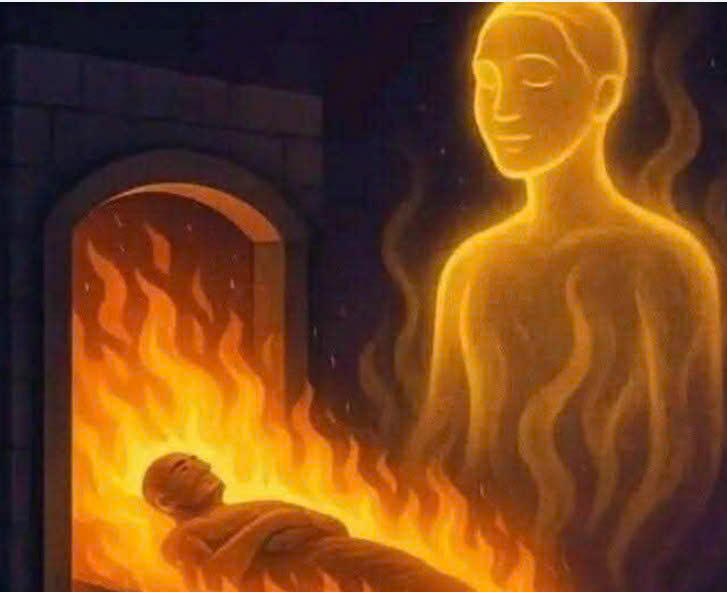
Pacemakers in particular must be removed because the intense heat can cause them to rupture, potentially damaging equipment. These precautions highlight how carefully monitored and regulated the cremation process truly is. Beyond the practical aspects, many people also wonder what cremation means for the soul, especially those whose religious beliefs emphasize life after death. While the physical steps are straightforward, the spiritual questions vary widely across cultures, faiths, and traditions. Hinduism and Buddhism offer some of the clearest religious explanations for cremation. In Hinduism, cremation is the most common and preferred practice. Hindus believe that the soul, or atman, is eternal and simply sheds the physical body at death.
Fire is viewed as a sacred purifier that helps the soul transition to its next existence within the cycle of reincarnation. Cremation, therefore, is not just a physical necessity but a spiritual act that supports the soul’s journey. Buddhism also embraces cremation, though the belief system differs from Hinduism in that Buddhism does not consider the soul permanent. Instead, consciousness continues through cycles of rebirth. Cremation becomes a symbolic acknowledgment of impermanence—a reminder that physical form is temporary, and release opens the path to the next stage of existence.
Christianity, on the other hand, has evolved significantly in its views on cremation. For centuries, many Christian traditions, especially Catholicism, discouraged cremation because of the belief in bodily resurrection. Burial was regarded as a way to honor this belief. Today, however, most Christian denominations accept cremation as long as it does not conflict with faith in resurrection. Christians generally believe that the soul is judged by God upon death and goes to heaven, hell, or a transitional state such as purgatory. The treatment of the physical body—whether through burial or cremation—does not determine the soul’s destiny. Instead, a person’s faith and their relationship with God guide the soul’s path.
Islam holds one of the most distinct positions regarding cremation. According to Islamic teachings, cremation is strictly prohibited. Muslim tradition requires burial as soon as possible after death, carried out with simplicity and deep respect. Muslims believe the soul separates from the body at death but remains connected to it until the Day of Judgment. The prohibition of cremation reflects an emphasis on dignity, honoring the body God created, and following religious commandments. In today’s society, many people identify as spiritual but not religious, or they embrace a secular perspective entirely.
For them, cremation often represents a natural return to the earth. Some believe the soul transitions to another realm or becomes part of the universe. Others view the continuation of someone’s essence through memories, influence, and the legacy they leave behind. Scientists and humanists generally view death as the end of consciousness, seeing cremation as a personal, practical, or ecological choice rather than one with spiritual implications. Regardless of belief system, cremation prompts many people to reflect on life, legacy, and what it means to honor someone after they’re gone. For some, it provides closure.
For others, it opens conversations that families may have avoided for years. What remains true across all perspectives is that cremation is a deeply personal decision—one shaped by faith, culture, family, and the desire to provide dignity and peace in a final farewell. If you found this article helpful, please consider sharing it with your family and friends on Facebook so more people can understand the process and the beliefs surrounding it.