Harold Wilson had been a widower for six months, yet the apartment he once shared with Margaret still felt like she might walk through the door at any moment. Her lavender perfume lingered in their bedroom, her reading glasses remained on the nightstand, and the bookmark in her unfinished romance novel hadn’t moved since the night she passed. After thirty-seven years of marriage, learning how to live without her felt like learning how to breathe again.
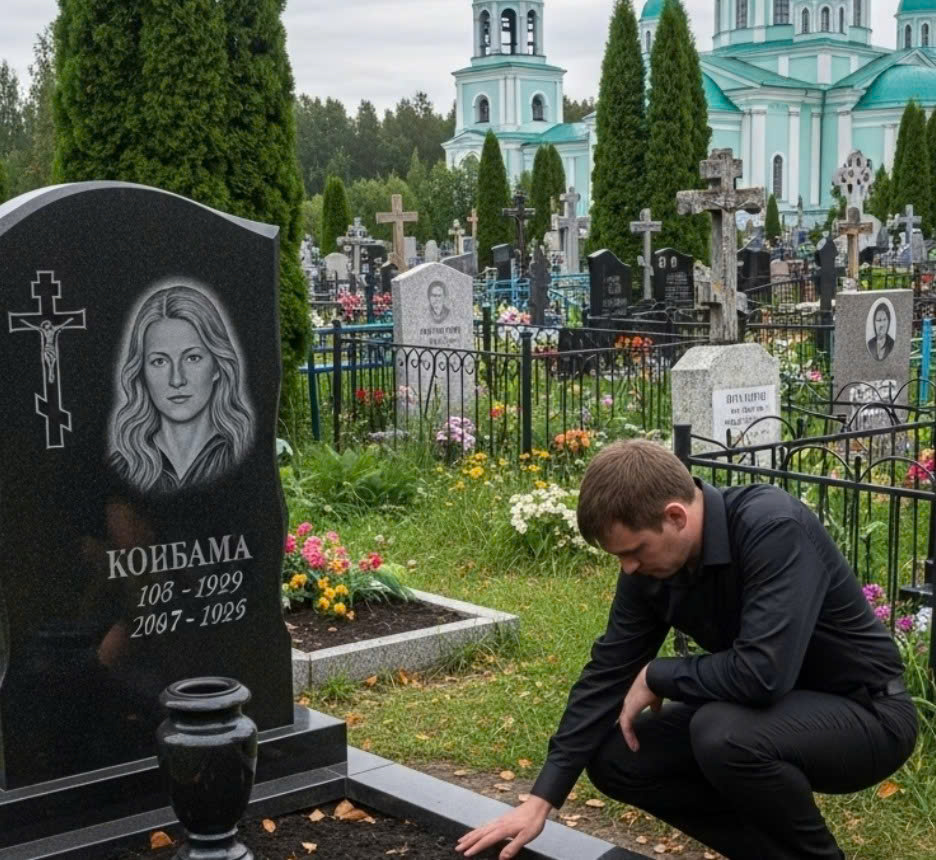
What kept him grounded was his Sunday ritual. Every week, just after sunrise, Harold brought a bouquet of red roses to Rosewood Cemetery, placing them beneath the old oak tree that shaded Margaret’s grave. She used to grow roses in their backyard and always called them “honest flowers,” beautiful but demanding care — much like love itself.
Harold arranged each bouquet exactly the way she liked: taller stems in the center, shorter ones framing the sides. Then he’d sit beside her headstone, reading small pieces of the newspaper aloud or simply talking to her the way he used to at home. Even in silence, he felt close to her.
But three Sundays ago, something changed. When Harold arrived at the cemetery, the roses he had left the week before were simply gone. Not wilted. Not scattered. Missing entirely. Confused, he checked nearby graves, assuming maintenance staff had moved them, but found nothing. The following week, the new bouquet vanished again.
Someone, deliberately and repeatedly, was taking Margaret’s flowers.
Hurt and confused, Harold went to the cemetery office. Eddie Martinez, who had worked there for decades, listened kindly but couldn’t offer much help. The cemetery, he explained, had limited oversight, and without proof of wrongdoing, there was little they could do.
So Harold decided to find the truth himself.
He bought a small outdoor motion-activated camera, placed it discreetly in a shrub near Margaret’s resting place, and waited. The following Sunday, the roses were gone once more — but now he had footage.
Back home, he watched hours of recordings: squirrels, birds, wind… nothing unusual. But late Thursday afternoon, a small figure appeared on screen.
A little girl — eight or nine years old — stepped into view. She walked straight to Margaret’s grave, lifted the roses gently from the vase, held them against her chest, and left.
Harold replayed the short clip several times, stunned. She wasn’t mischievous or careless. She moved with quiet purpose, almost reverence. But why would a child be taking flowers from a stranger’s grave?
Determined to understand, Harold returned to the cemetery early the next Sunday. After two quiet hours, he finally saw her — the same little girl, emerging from behind a row of headstones with a handful of wilted flowers in her arms. She walked to a modest grave a short distance away and began arranging the faded petals in a vase.
Harold approached slowly, careful not to startle her. When he reached the grave, he saw the name:
MICHAEL SANTOS, 2014–2021.
A child’s grave.
“Excuse me,” he said gently.
The girl’s eyes widened with fear, and she clutched the wilting flowers as if expecting to be scolded.
“I’m not here to get you in trouble,” Harold assured her. “I just want to understand.”
Her voice trembled as she whispered, “I’m sorry. I didn’t mean to steal. My brother… this is his grave. My mom works two jobs, and we can’t buy flowers. But I don’t want him to be alone. When I saw the pretty roses on the lady’s grave, I thought maybe she wouldn’t mind if Michael had some too.”
Harold felt his heart crack open — not from anger, but from compassion. This child had been taking flowers out of love, not malice.
“What’s your name?” Harold asked.
“Elena,” she replied softly.
He knelt beside her. “Elena, I think Margaret would be honored to share her flowers with Michael.”
Harold walked back to Margaret’s grave, retrieved the fresh bouquet he had brought that morning, and returned to Elena. Together, they replaced the wilted stems in Michael’s vase with vibrant red roses. The little girl’s eyes filled with tears.
“From now on,” Harold said, “I’ll bring two bouquets every Sunday — one for Margaret, and one for Michael.”
Elena nodded, her relief visible. “Thank you… now he won’t look forgotten.”
And so a new tradition began. Every Sunday, Elena joined Harold at the cemetery. She read stories to her brother’s grave while Harold shared memories of Margaret. Through shared grief, they found a sense of connection and healing that neither had expected.
Word of their bond began to spread. Neighbors offered help. Cemetery staff suggested an “adopt-a-grave” program for neglected plots. Before long, Harold and Elena were joined by volunteers who wanted every grave to feel remembered.
One year later, the small community gathered around Margaret’s and Michael’s resting places with flowers, food, and friendship — all sparked by one widower’s missing roses and a little girl’s love for her brother.
As Harold sat between the two graves that morning, listening to laughter and conversation ripple through the cemetery, he felt something he hadn’t felt since Margaret passed.
Peace.
Love, he realized, doesn’t end — it simply finds new places to bloom.