The room grew unnervingly quiet the moment the monitor’s steady rhythm dissolved into a single, unbroken line. Medical staff stood frozen for a brief second, the weight of finality pressing down on everyone present. The heart had stopped. According to all clinical indicators, life had ended. Family members bowed their heads, some in shock, others already beginning to grieve, believing the moment was irreversible.
Then something unexpected happened.
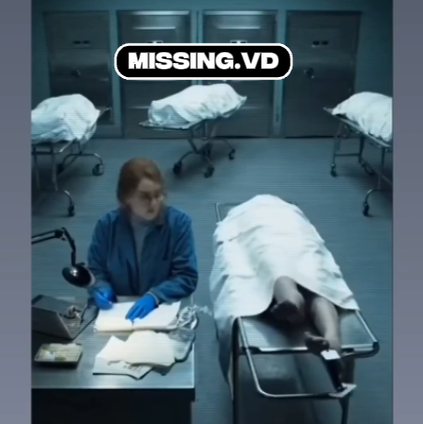
The body on the bed moved.
An arm jerked sharply, fingers curling as if grasping at the air. The shoulders lifted slightly, and the jaw snapped shut with a sound that echoed in the otherwise silent room. Several people stepped back instinctively, their breath catching as confusion and fear rippled through the space. To the untrained eye, it looked like a return — as though the man was fighting his way back from death itself.
Whispers spread quickly. Some believed they were witnessing a miracle. Others felt a deeper, almost primal unease, unsure whether they were seeing life reemerge or something they could not explain. The moment blurred the boundary people rely on for comfort: the clear distinction between life and death. For those present, it was unforgettable.
However, science offers an explanation far removed from the supernatural.
What occurred was not a revival, but a rare and well-documented medical phenomenon known as post-mortem muscle activity, sometimes referred to as post-mortem seizures. These involuntary movements can happen shortly after death, even when the heart has ceased beating and breathing has stopped completely. While unsettling, they do not indicate consciousness, pain, or a return to life.
After death, the human body does not shut down instantaneously. Electrical signals may still linger in nerve cells, and chemical changes within muscles can trigger sudden contractions. As oxygen levels drop and cellular balance collapses, muscles can fire unpredictably, producing movements that appear purposeful but are entirely reflexive. Arms may lift, fingers may twitch, or the jaw may clamp shut without any involvement from the brain.
For people unfamiliar with this process, the effect can be deeply disturbing. Our minds are conditioned to associate movement with life, intention, and awareness. When those expectations are violated, the emotional impact is powerful. Medical professionals receive training to understand and anticipate these reactions, but family members and bystanders often encounter them without warning.
In recent years, brief clips of similar events have circulated widely on social media, frequently stripped of context. Viewers watching from home may interpret the footage as evidence of miracles, medical mistakes, or even fictional explanations. Without proper understanding, these videos can fuel anxiety and misinformation about death and the dying process.
In reality, these movements are purely physiological. They do not mean the person is aware, suffering, or capable of recovery. The brain, which governs consciousness and perception, has already ceased functioning. What remains is the body’s final mechanical response as complex systems shut down at different speeds.
Doctors emphasize that such reactions, while rare, are normal within the range of human biology. They can occur minutes after death and sometimes longer, depending on factors such as temperature, cause of death, and the individual’s physical condition. Importantly, these movements are not a sign that medical staff acted too soon or made an error in determining death.
Understanding this phenomenon can offer reassurance during an emotionally overwhelming moment. Grief is already heavy without the added burden of confusion or fear. Knowing that these movements are a natural part of the body’s shutdown process can help families process what they witness without questioning reality or blaming themselves.
The human body is remarkably complex, even in its final moments. Death is not a single switch being flipped, but a gradual cascade of biological changes. Muscles, nerves, and cells each follow their own timeline, and occasionally that results in visible movement after life has ended.
While shocking to observe, post-mortem muscle activity serves as a reminder of how intricate our physiology truly is. It highlights the importance of medical education and clear communication, especially during moments of loss. When explained calmly and respectfully, science can replace fear with understanding.
In the end, what may look like a return from death is simply the body completing its final processes. There is no miracle or mystery, only biology playing out its last reflexes. Recognizing this truth does not diminish the emotional weight of loss, but it can bring clarity and peace during one of life’s most difficult experiences.
Post-mortem movements are rare, natural, and deeply misunderstood. They remind us that even after the heart stops, the body may briefly react in unexpected ways. While startling, these moments are not signs of life returning, but rather the quiet conclusion of the body’s complex journey.