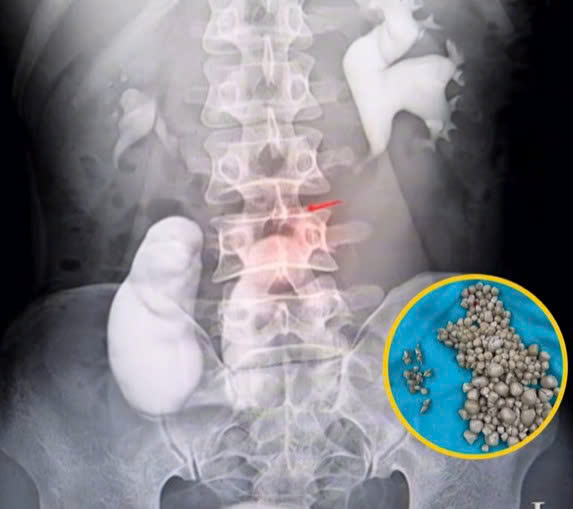
A startling medical case from Taiwan has drawn global attention and sparked serious conversations about modern drinking habits and their hidden health consequences. Xiao Yu, a 20-year-old woman, arrived at Chi Mei Hospital in Tainan believing she was suffering from a routine illness. She had a fever, intense lower back pain, and overwhelming fatigue—symptoms that often point to a urinary tract infection or kidney inflammation. What doctors discovered instead was far more alarming. Her right kidney was filled with nearly 300 kidney stones, so many that surgeons later compared them to trays of “little steamed buns.” There was no rare genetic disorder or underlying disease to blame. The cause turned out to be something surprisingly common: for years, Xiao Yu had avoided drinking plain water and relied almost entirely on alcohol, sweetened fruit drinks, and bubble tea to stay hydrated.
What began as a shocking medical discovery quickly became a broader warning about lifestyle choices that are increasingly common around the world. Many young people today replace water with sugary beverages because they are convenient, trendy, and heavily marketed as enjoyable daily treats. Bubble tea, which originated in Taiwan and later became a global sensation, sits at the center of this story. Xiao Yu’s experience forces a difficult but necessary question: how many health risks quietly develop when long-term habits feel harmless? Her case is no longer just a medical curiosity—it is a powerful reminder of how easily daily decisions can lead to serious consequences.
When Xiao Yu first arrived at the hospital, doctors suspected a standard infection. However, CT scans and ultrasounds revealed a kidney that was swollen with fluid and packed with stones of every size, ranging from fine grains to clusters nearly two centimeters wide. Most kidney stone patients have one or two stones, sometimes a handful. Seeing hundreds inside a single kidney was almost unheard of. Over time, these stones had blocked her kidney’s ability to filter waste properly, triggering infection and fever. Her body had reached a breaking point after years of silent damage.
When doctors questioned her lifestyle, the explanation became clear. Xiao Yu admitted she had barely consumed plain water for several years. Instead, she regularly drank wine, fruit juices, and multiple cups of bubble tea each day. While these beverages seemed harmless, they left her chronically dehydrated. Without enough water to dilute minerals in her urine, her kidneys became an ideal environment for stones to form. The buildup happened gradually and without obvious warning signs until it reached a dangerous level.
Bubble tea played a major role in her daily routine, reflecting its wider place in modern culture. Since its invention in the 1980s, bubble tea has grown into a multibillion-dollar global industry. Its appeal lies in customization, sweetness, and social appeal. However, beneath its colorful presentation is a nutritional reality that often goes unnoticed. A single serving can contain eight teaspoons of sugar or more, far exceeding recommended daily limits. Added toppings and creamers increase both calories and sugar content. For Xiao Yu, these drinks replaced water entirely, depriving her body of proper hydration while flooding it with sugar.
Health experts note that her case, while extreme, reflects a growing global trend. Sugary drinks are linked to rising rates of obesity, type 2 diabetes, and kidney disease. Chronic dehydration combined with high sugar intake increases the risk of kidney stones significantly. According to international health organizations, roughly one in ten people will experience kidney stones at some point in their lives.
Faced with a kidney packed with stones, doctors had no choice but to operate. They performed a procedure known as percutaneous nephrolithotomy, which involves removing stones through a small incision in the back. Over several hours, surgeons extracted hundreds of stones, filling multiple trays. The sheer volume shocked the medical team and quickly drew public attention. Fortunately, the surgery was successful. Xiao Yu’s pain subsided, her fever resolved, and she was discharged after several days of recovery.
Her doctors used the case as an educational moment, emphasizing that lifestyle habits can override typical risk factors. Although kidney stones are more common in men, poor hydration and high sugar intake can dramatically increase risk for anyone. Without intervention, Xiao Yu’s condition could have led to permanent kidney damage or life-threatening infection.
The global popularity of bubble tea highlights a larger public health challenge. While it remains a popular treat, medical professionals stress it should never replace water. Frequent consumption can contribute to long-term issues such as metabolic disorders, cardiovascular strain, and kidney problems. Xiao Yu’s story illustrates the danger of turning indulgences into daily necessities.
From a scientific perspective, kidney stones form when urine becomes too concentrated. Without enough water, minerals crystallize and gradually grow into stones. Symptoms are often severe, with pain commonly described as among the most intense the human body can experience. In Xiao Yu’s case, fever signaled that infection had already begun. Without surgery, the outcome could have been devastating.
The lesson from her experience is simple but vital: water is essential. Sugary drinks do not provide the same protective benefits. Staying hydrated with plain water helps kidneys function properly and prevents mineral buildup. Moderation, balance, and awareness are key to protecting long-term health.
Xiao Yu’s story has resonated far beyond her hospital room. It has sparked discussions about nutrition, hydration, and modern lifestyle habits. While bubble tea remains a cultural favorite, her experience reminds us that health depends on everyday choices. Water may not be exciting or trendy, but it remains one of the most powerful tools for preventing avoidable illness.