The vibration of my phone against the cold metal workbench cut through the quiet of the garage like an alarm. I almost ignored it. My hands were greasy, buried in an old engine, the kind of work that usually drowned out the rest of the world. But when the phone buzzed again—three short vibrations in a row—I froze. That signal meant only one thing in our family: danger. I wiped my hands, flipped the phone over, and saw my daughter’s name. Lily. Her message was short, broken, and terrifying: “Dad. Please help.” Seconds later, a blurry photo arrived—her pink sneakers trapped by larger shoes, a jacket pulled over her head, and a note saying the teacher was nearby but refused to intervene. My chest tightened. Lily never cried wolf. If she reached out like this, she was scared beyond words.
I didn’t call the school office or wait for explanations. I knew how systems like that worked, how they protected influence over innocence. I grabbed my jacket and looked around the garage at the men who had stood beside me for years. When I said we were going to the school, no one asked questions. Engines roared to life, and within minutes, a line of motorcycles cut through traffic toward Oak Creek High, not reckless but determined. When we arrived, the parking lot fell silent. I walked through the front doors without hesitation, my focus locked on finding my child.
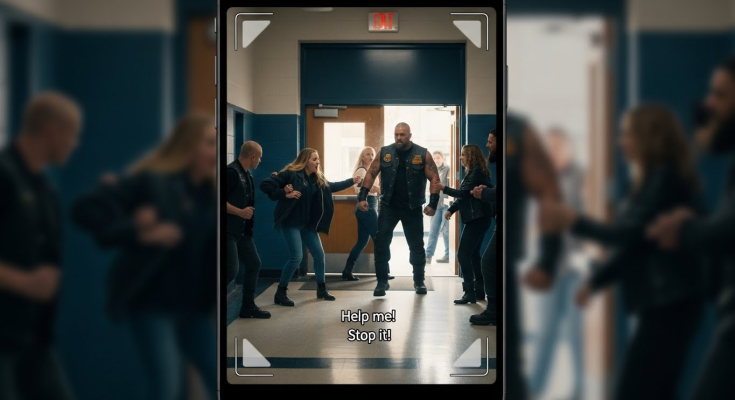
The hallway scene stopped my breath. A group of students stood laughing, phones raised, while one boy dragged a girl across the floor with a jacket covering her head. I recognized her shoes instantly. Lily’s voice trembled as she begged for help. She reached toward an adult nearby—the vice principal—who pulled her skirt away and told her to stop causing a disturbance. She turned her back. That moment burned into me. The laughter stopped when I stepped forward. The boy dropped the jacket, his confidence draining as he noticed the men filling the hallway behind me.
I didn’t shout at him. I didn’t need to. I told him to help my daughter up, slowly and carefully. Lily flinched when he moved, fear overriding everything else, and I felt anger rise before I forced it down. I knelt and opened my arms. When she saw me, she broke, collapsing against my chest as the hallway watched in silence. I held her, shielding her while her sobs echoed through the space that had failed her moments earlier.
The vice principal returned, threatening to call the police, insisting it was harmless behavior, that my daughter was too sensitive. I calmly pointed out that no one had considered calling authorities while a student was being humiliated. When police sirens arrived, the tension shifted. The sheriff recognized me, questioned me, then watched a video pulled from social media—clear proof of what had happened. His expression changed. This was no longer about reputations or appearances. It was about accountability.
We left with Lily, but the fallout came quickly. Inspections shut down my business. Then authorities came to my home with paperwork claiming my environment was unsafe, removing Lily temporarily. That was the moment I understood the fight wasn’t physical anymore. It was procedural, calculated, and meant to break me quietly. Instead, it united people who had been silent for too long.
At the school hearing days later, I wore a suit instead of leather and walked in alone. The board prepared to expel Lily, blaming her for the chaos. Then voices rose from the crowd. Parents stood one by one, sharing stories of ignored bullying, dismissed complaints, and quiet suffering. The room shifted as evidence appeared—recordings, deleted footage recovered, and proof of bribery. The truth unraveled quickly after that. Officials were removed. Charges were filed. Lily walked back into my arms, stronger than before.
The following Monday, she chose to return to school. This time, she didn’t walk alone. I rode with her, not to intimidate, but to support. As she stepped through the doors, classmates greeted her with respect, not fear. Watching her go, I realized something important. Strength isn’t always loud. Sometimes it’s standing still, refusing to let lies define your child. And sometimes, it’s teaching them that they are never alone, even when the world tries to convince them otherwise.