The house at 847 Maple Grove had been part of my family for more than fifty years, a modest three-bedroom ranch my grandparents bought in 1973 with their combined savings and a lot of hope. My name is Maya Morrison, I’m thirty-five years old, and I inherited the house three years ago after my grandmother Eleanor passed away, following my grandfather Robert by five years. Before she died, Grandma asked me to promise three things: keep the house in the family, take care of her garden, and never let anyone touch the apple tree.
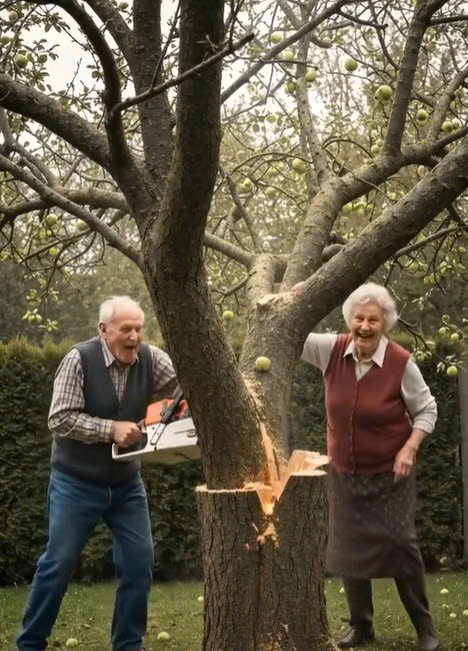
That tree was never just a tree. My grandparents planted it the day they moved in, a young sapling brought from my great-grandfather’s orchard in upstate New York. It was one of the last survivors of a blight that destroyed most of his trees decades earlier, and my grandparents drove eight hours with its roots wrapped in damp cloth to keep it alive. For fifty years, that Northern Spy apple tree stood at the center of our backyard, growing tall and wide, producing crisp apples every fall. Grandma baked pies, canned preserves, and pressed cider, always sharing with neighbors. It survived storms, droughts, and time itself, returning each spring with white blossoms that filled the yard with life.
My childhood memories lived under that canopy. I read books in its shade, picked apples with cousins, and swung from the tire Grandpa hung on its strongest branch. Even as an adult, I sat there with Grandma, sipping lemonade and listening to her stories. When I inherited the house, I updated what needed fixing, but I left the creaky stair and the old kitchen tiles, because some things carried voices you didn’t erase.
The neighborhood had changed. Longtime neighbors moved away, and six months ago the Kowalskis next door sold their home to Glenn and Faye Hendricks. From the start, they acted superior, tearing out gardens, installing blinding lights, and talking about “modernizing” everything. Then one Saturday, Faye casually told me my apple tree blocked the sun they wanted for their hot tub. I told her the tree stayed. Glenn later warned me I was making things difficult. I stood my ground.
For weeks, construction noise filled the street. Then I left for a short vacation, my first real break in years. With little cell service, I didn’t see Tara’s frantic messages until midweek. When I finally called her back, her words dropped like ice. They had cut down my tree while I was gone, telling police I had given permission.
I drove home in shock. The tree was gone, reduced to a jagged stump and sawdust. I counted the rings through tears, fifty years of growth erased in an afternoon. Rage followed grief. When I confronted Glenn and Faye, they dismissed it as “just a tree.” They thought I had no recourse. They were wrong.
I filed a police report, contacted a property attorney, and hired a certified arborist. He confirmed the tree’s value was enormous due to its age, health, and heritage. My attorney sent a demand letter outlining trespass, property damage, and replacement costs. At the same time, I planted three large Norway spruce trees along the property line, fully within my rights. They would grow fast and cast even deeper shade than the apple tree ever had.
When Glenn and Faye realized the legal and practical consequences, panic replaced arrogance. Their attorney pushed for settlement. Six weeks later, they agreed to pay for damages, repairs, and legal fees, and signed an agreement never to enter my property again. I used part of the money to commission a bench made from the apple tree’s wood, carved with my grandparents’ names and planting date.
Over time, the neighborhood rallied around me. Glenn and Faye became isolated, their reputation damaged beyond repair. Eventually, they moved. Before leaving, Faye apologized, admitting they had destroyed something irreplaceable for something selfish. I accepted the apology without forgetting the lesson.
I later planted a new apple tree, not as a replacement, but as a continuation. It would take decades to mature, and that was fine. Some things are worth waiting for. My backyard wasn’t the same, but it was honest. The apple tree was gone, but its legacy lived on in memory, in law, and in the quiet certainty that standing up for what matters can change everything.