She once lit up the silver screen with a beauty that felt effortless and a charm that seemed to belong to another era. For decades, fame followed her, along with professional success and a love story that linked her to one of the biggest movie stars in Hollywood history. From the outside, her life appeared polished and enviable, a dream shaped by premieres, accolades, and public admiration. Yet behind the glamour lived a woman who was quietly fighting to remain herself in a world that constantly tried to define her. Now at 88, she credits her ability to stay grounded through heartbreak, reinvention, and public judgment to one constant force: her faith.
Over the course of her career, Dyan Cannon proved herself to be far more than a pretty face. She moved seamlessly across genres and generations, earning respect for performances that blended intelligence, humor, and emotional depth. Her work brought her three Academy Award nominations, three Golden Globe nominations with one win, and a Saturn Award, reflecting her versatility and staying power. In 1983, her impact on the industry was formally recognized when she received a star on the Hollywood Walk of Fame. Audiences adored her in films such as Bob & Carol & Ted & Alice, The Last of Sheila, Heaven Can Wait, and Deathtrap, where she demonstrated an ability to shine in comedy, mystery, and drama alike. Still, the most transformative chapter of her life began away from the cameras.
That chapter was defined by a relationship that would test her sense of self in ways no role ever had. In 1961, Cary Grant was reportedly alone in his Beverly Hills home late one night, idly watching television. The program itself held little interest until a young woman appeared on screen. She was in her early twenties, with expressive eyes, full lips, a delicate nose, and honey-blond hair falling casually across her face. Grant was immediately captivated. Determined to meet her, he made phone calls and leaned on connections until he found a way to reach her. At the time, she was already gaining recognition through television, and his pursuit was persistent. After months of courtship, their romance unfolded during the vibrant, fast-moving culture of the 1960s, capturing public attention almost as much as their individual careers.
They married when she was 28 and he was 61, a pairing that fascinated Hollywood. She later spoke openly about how deeply she loved him and how committed she was to making the marriage work. Yet that love came with expectations that slowly chipped away at her identity. He wanted her to step back from acting, and she did. He wanted to change how she dressed, how she styled her hair, even how she moved and wrote. Wanting desperately to please him, she tried to become the woman she believed he wanted. Over time, those efforts left her feeling smaller, less herself. She recalled adjusting everyday behaviors, from how gently she closed cabinets to how carefully she held the steering wheel, all in hopes of maintaining peace.
Eventually, she realized that no amount of self-erasure could bridge the gap between them. Going against her deepest instincts came at too high a cost. Their marriage ended in 1968 after just three years, and the separation was painful and public. She later described feeling emotionally suffocated, unable to breathe within the confines of that relationship. Despite everything, she did not look back with bitterness. Her love, she explained, had been genuine and uncalculated. With time, she chose gratitude over resentment, acknowledging that the experience shaped her into a stronger, more self-aware woman.
From that marriage came her greatest joy: her daughter Jennifer, born in 1966 and the only child Grant ever had. Motherhood became a grounding force, anchoring her life even as her personal world shifted. After Grant’s death in 1986, she was offered large sums of money to write a revealing memoir about their marriage. She declined, feeling that the timing and intention were wrong. Years later, she was encouraged again, this time to tell a broader story about relationships, love, and the ways people hurt one another and themselves. She waited until she felt emotionally ready, eventually framing her reflections not as an exposé, but as an exploration of human connection.
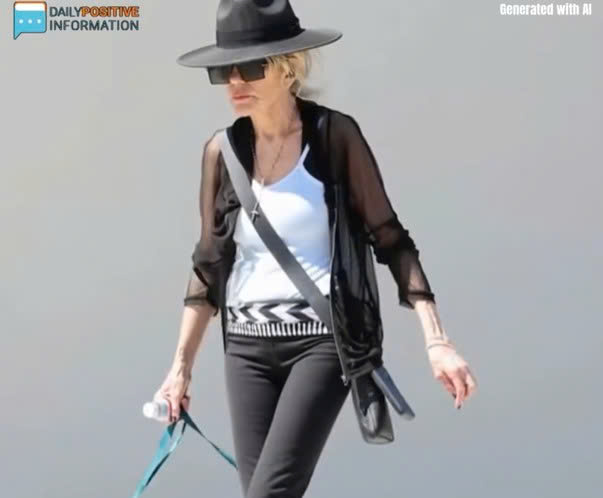
As the years passed, she remained a visible presence, attending events well into her eighties with the same warm smile that audiences remembered. When new photographs of her surfaced in 2023, public reaction was mixed. Many admired her vitality, praising her for staying active and confident. Others were less kind, offering harsh commentary that revealed society’s ongoing obsession with youth, especially when it comes to women who were once celebrated for their looks. In 2025, when she was spotted walking her dogs in Los Angeles, dressed simply in a fedora, flared trousers, and a light summer top, the contrast between her relaxed confidence and public scrutiny was striking.
Through it all, she has found something deeper than fame: spiritual peace. She speaks openly about prayer as the practice that keeps her centered and describes herself as deeply connected to her faith. For her, spirituality offered clarity when life felt confusing and painful. It became a source of meaning that fame could never provide. Today, she volunteers regularly with people in recovery, offering encouragement and understanding, and hosts a monthly Bible study in her home. Her faith is not performative but personal, rooted in service and reflection.
Looking back, Dyan Cannon speaks with a sense of calm fulfillment. It took time, she admits, to find lasting happiness, but she has found it on her own terms. Her journey from Hollywood icon to a woman at peace with herself stands as a reminder that real beauty does not fade with age. It deepens. It shifts inward. And it endures.