When Claire Donovan first laid eyes on the Riverside Grand Hotel, it barely looked like a building anymore. Sitting on the outskirts of Dayton, Ohio, the once-proud structure felt more like a memory than a place. Broken windows stared out like empty eyes, ivy climbed the cracked brick walls, and a damp, decaying smell lingered in the air. Most people drove past without slowing down. To them, it was nothing more than a forgotten ruin from another era.
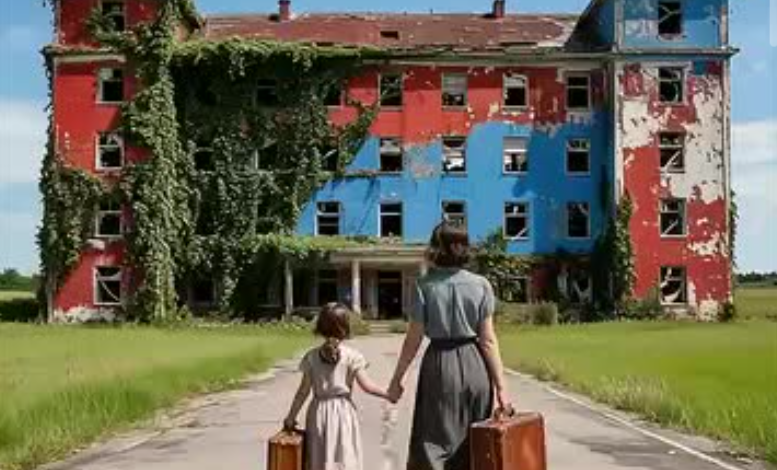
But Claire saw something else.
At thirty-eight years old, recently divorced and raising her eight-year-old son Mason on her own, Claire had learned to look for possibility where others saw dead ends. Her life was defined by exhaustion and determination. She worked mornings at the county clerk’s office and evenings waiting tables at a diner, juggling bills, homework, and hope in equal measure. The small apartment they shared felt more like a holding place than a home. When the county announced a tax auction for abandoned properties, Claire scrolled through the listings late one night, not expecting much more than disappointment.
Most properties were well beyond anything she could afford. Then one listing made her stop.
Riverside Grand Hotel. Starting bid: $5,000.
The hotel had been closed for over twenty years, abandoned after a fire and a financial collapse that no one in town liked to talk about. The listing was blunt, calling the structure unsafe and unsuitable for living. Still, the faded photograph showing a grand staircase and a ballroom from another time pulled at her. It sounded reckless, and she knew it. But deep down, she wondered if this was the risk her life had been leading her toward.
At the auction, her hands shook as she raised her paddle. No one else showed interest. The gavel came down, and just like that, Claire Donovan owned a twenty-four-room hotel for less than the cost of a used car.
The first time she opened the front doors, doubt rushed in. The smell of mold and old rain was overwhelming. Plaster crumbled under her boots, and debris littered the floor. A bird’s nest sat where a chandelier had once hung. Yet as light filtered through shattered glass, she noticed details that refused to disappear. Beneath the grime, marble still shone faintly, and the staircase curved upward with quiet dignity.
“Mom, this place is creepy,” Mason whispered, gripping her hand.
Claire smiled despite the fear tightening her chest. “It’s ours.”
Room by room, the damage revealed itself. Graffiti covered the walls. Buckets caught water from the leaking roof. The place felt overwhelming. At the top of the staircase, however, they noticed a locked door framed in brass, the word PENTHOUSE barely visible beneath years of dust. The key they found downstairs didn’t fit, and the door wouldn’t budge. Claire made a note to come back later. For now, staying afloat mattered more than curiosity.
Every contractor she contacted gave the same advice. Tear it down. Sell it for scrap. Walk away while you still can.
But Claire couldn’t let go. Every spare hour went into cleaning, hauling trash, and patching what she could. Mason worked beside her, sweeping floors with a broom almost taller than he was. They ate simple lunches sitting on overturned buckets, dreaming aloud about what the hotel might become. Slowly, something unexpected happened. The town began to notice.
A retired carpenter offered to fix broken windows. A church youth group arrived one Saturday with paint and rollers. A former electrician rewired part of the lobby simply because he couldn’t stand to see the building fade away. Progress was slow, but the Riverside Grand began to feel alive again.
Still, the locked penthouse lingered in Claire’s thoughts.
One rainy evening, exhaustion and curiosity finally pushed her to act. She borrowed a crowbar and climbed the stairs with Mason following close behind, flashlight in hand. After several attempts, the door gave way with a long, tired groan. Dust filled the air. Inside, the penthouse felt strangely untouched. Heavy curtains still framed the windows, and furniture stood covered in sheets, frozen in time.
Mason’s light landed on an old leather trunk.
The trunk was locked, but the clasp gave way. Claire expected to find old linens or forgotten supplies. Instead, she uncovered portfolios and tubes filled with rolled canvases. One folder bore a name she barely recognized. Inside were drawings and paintings of extraordinary quality. One canvas showed a bustling city street from the early twentieth century, the colors still vivid.
That night, after Mason fell asleep, Claire searched the name online. The results stunned her. The artist was a master, with works valued in the millions. Her hands shook as she stared at the screen.
A week later, she contacted an art appraiser, downplaying what she had found. When he saw the collection, his reaction said everything. After days of examination, he confirmed the truth. The works were authentic, undocumented, and astonishingly valuable.
When the final valuation arrived, Claire had to sit down.
$180 million.
The news spread quickly. Reporters gathered outside the hotel. Museums reached out from across the country and beyond. With careful legal guidance, Claire chose to loan most of the collection to public institutions so it could be shared. She established a trust for Mason’s future and invested in fully restoring the Riverside Grand.
Five years later, the hotel reopened as a boutique art and cultural center. The silent ballroom now hosted events beneath restored chandeliers. The penthouse became a gallery honoring the discovery that changed everything.
On opening night, Claire stood in the lobby holding Mason’s hand. He looked up at the staircase, eyes wide.
“Do you ever miss how it was?” he asked.
She smiled softly. “No. Because this was always what it was meant to be.”
For the first time in years, Claire wasn’t just surviving. She was finally home.