In March 2024, visitors enjoying a peaceful day on the water at McGee Creek Reservoir in Atoka County, Oklahoma, stumbled upon something that looked like it belonged in a science fiction film rather than a quiet Southern lake. Suspended from submerged tree branches just below the surface were strange, jelly-like masses that appeared soft, translucent, and vaguely alien. Boaters snapped photos and shared their discoveries, sparking curiosity and speculation about what these unusual formations could possibly be.
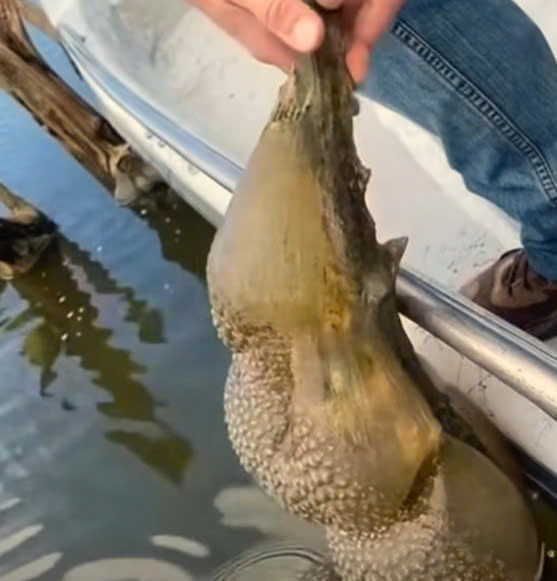
At first glance, the blobs looked unsettling. Their rounded, brain-like texture and cloudy, gelatinous appearance made them seem mysterious, even ominous. Some observers wondered whether they were invasive species, pollution-related growths, or something entirely unknown. However, as experts stepped in to investigate, it quickly became clear that these formations were neither dangerous nor new. In fact, they are a natural and beneficial part of a thriving freshwater ecosystem.
The Oklahoma Department of Wildlife Conservation provided reassurance and clarity, explaining that the blobs are colonies of bryozoans, sometimes referred to as “moss animals.” While the name might not sound familiar to many people, bryozoans have existed in aquatic environments for hundreds of millions of years. They are tiny, microscopic aquatic animals that live together in tightly connected colonies. Each individual organism within the colony is known as a zooid. On their own, zooids are nearly invisible to the naked eye, but when thousands gather and grow together, they form the large, jelly-like clusters that startled lake visitors.
The unique appearance of these colonies comes from a protective outer layer composed of chitin, a natural material that also appears in the exoskeletons of insects and crustaceans. Underwater, the colony feels soft and slightly squishy to the touch. However, when removed from the water and allowed to dry, it becomes firm and brittle. This flexible outer layer protects the delicate zooids inside while allowing the entire structure to remain buoyant and adaptable in changing water conditions.
Bryozoans reproduce and grow rapidly when environmental conditions are favorable. Clean water, stable temperatures, and abundant microscopic food sources allow colonies to expand quickly. They often attach themselves to submerged surfaces such as tree branches, rocks, docks, and aquatic plants. Over time, a single colony can grow into a surprisingly large mass, sometimes reaching the size of a basketball. While their texture and shape may appear unusual, they pose absolutely no threat to humans, pets, fish, or other wildlife.
In fact, bryozoans play a vital role in maintaining healthy freshwater ecosystems. They are filter feeders, meaning they consume tiny particles suspended in the water. Each zooid uses small, hair-like structures to capture bacteria, algae, and organic debris. By filtering these particles, bryozoan colonies help improve water clarity and overall quality. This natural filtration system supports cleaner water and contributes to a balanced aquatic environment.
Beyond improving water conditions, bryozoans also support the broader food web. Various aquatic species, including certain fish, snails, and mussels, feed on them. This makes bryozoans an important link in the chain of life within lakes and reservoirs. Their presence provides nourishment for other organisms while simultaneously helping to maintain water health. Rather than being something to fear, they are actually a sign that the ecosystem is functioning properly.
Wildlife experts emphasize that bryozoans tend to thrive only in relatively clean water. They are sensitive to heavy pollution and poor environmental conditions. As a result, their presence at McGee Creek Reservoir serves as a positive indicator of water quality. Instead of signaling a problem, the jelly-like clusters demonstrate that the lake is supporting diverse and balanced aquatic life.
From a scientific and historical perspective, bryozoans are especially fascinating because of their ancient origins. Fossil records show that these organisms have existed for approximately 470 million years. That means they appeared long before dinosaurs and have survived dramatic changes in Earth’s climate and geography. Their extraordinary longevity highlights their adaptability and resilience. Over hundreds of millions of years, bryozoans have evolved to survive in oceans, rivers, and lakes across the globe.
This deep evolutionary history makes the sight of a bryozoan colony even more remarkable. When boaters spotted those gelatinous blobs hanging from underwater branches, they were actually witnessing a living connection to Earth’s distant past. These creatures have quietly persisted beneath the water’s surface through countless geological eras, continuing their simple yet essential role in aquatic ecosystems.
Public reaction to the discovery shifted once accurate information became available. What initially seemed strange and potentially alarming transformed into an opportunity for education. Nature often surprises us with forms and textures that look unfamiliar, but unfamiliar does not mean dangerous. In this case, the mysterious blobs turned out to be harmless, beneficial organisms performing exactly the role they have played for millions of years.
The next time you encounter unusual formations in a lake or pond, it may be worth pausing before jumping to conclusions. Many natural phenomena can appear odd at first glance. With a bit of scientific insight, those mysteries often become fascinating examples of how complex and interconnected ecosystems truly are.
At McGee Creek Reservoir, the jelly-like blobs hanging beneath the water are not invaders or environmental threats. They are bryozoan colonies—ancient, resilient, and quietly working to keep the water clean and balanced. Their presence is a reminder that even the most unexpected sights in nature often tell a story of harmony, adaptation, and ecological health.
What began as a puzzling discovery ultimately became a reassuring sign of environmental stability. Beneath the surface of that Oklahoma lake, life continues its intricate dance, sustained in part by these remarkable, gelatinous colonies that have been part of Earth’s story for nearly half a billion years.