Many people still assume that the two buttons found on modern toilets exist only as different ways to flush the same amount of water. At first glance, the feature may look like a simple design choice or even a cosmetic upgrade. However, those two buttons are part of a carefully designed system intended to conserve water and promote more responsible resource use in everyday life.
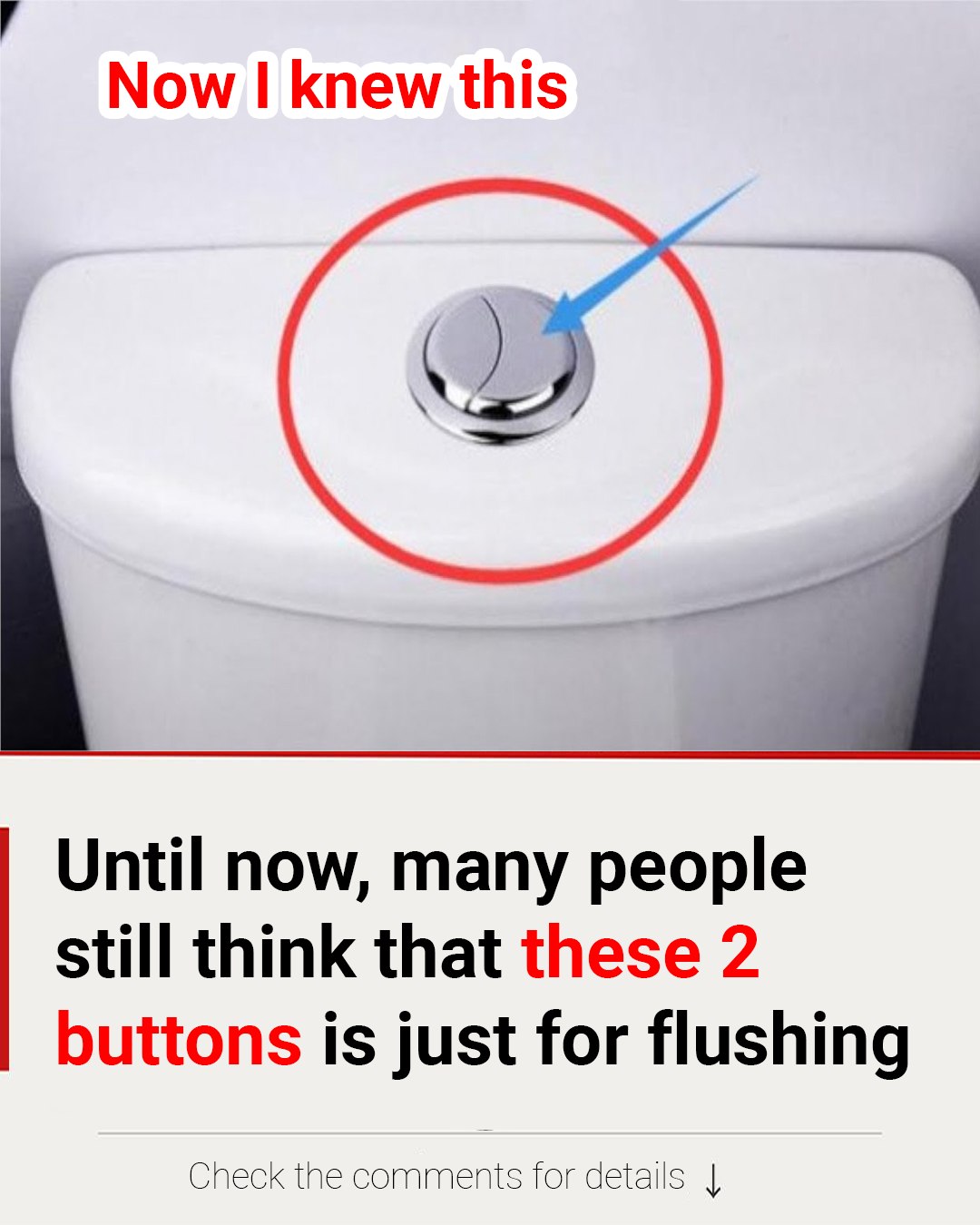
These systems are known as dual-flush toilets, and although the design seems small and easy to overlook, it represents an important innovation in household plumbing. By allowing people to control how much water is used with each flush, dual-flush toilets help reduce waste while still maintaining the convenience people expect from modern bathrooms.
The concept behind a dual-flush toilet is surprisingly simple yet highly effective. Traditional toilets rely on a single flushing mechanism that releases the same volume of water every time the handle is pressed. Whether the toilet is clearing liquid waste or solid waste, the system sends the full tank of water into the bowl.
Dual-flush toilets work differently. Instead of one handle or button, they are equipped with two separate buttons or levers. Usually, one button is larger while the other is smaller, and each is connected to a different valve that controls the amount of water released during a flush.
The larger button activates a stronger flush that releases a greater amount of water, typically around six to nine liters. This stronger flow is designed to efficiently clear solid waste from the bowl. The smaller button, on the other hand, releases a lighter flush using approximately three to four and a half liters of water. That smaller amount is generally more than enough to remove liquid waste.
While the difference in water volume might seem minor during a single use, the cumulative impact becomes significant over time. A household uses the toilet many times each day, and when those small differences are multiplied over weeks, months, and years, the savings add up.
Studies have shown that replacing older single-flush toilets with dual-flush systems can help a household save as much as 20,000 liters of water per year. That level of conservation benefits both the environment and the household budget.
Using less water reduces strain on local water supplies and lowers utility costs for homeowners. Although dual-flush toilets may sometimes cost slightly more to purchase or install compared to traditional models, the long-term savings often outweigh the initial investment.
The idea behind this design did not appear overnight. The dual-flush concept was first proposed by American industrial designer Victor Papanek in his influential 1976 book Design for the Real World. In that work, Papanek emphasized the importance of designing everyday products that serve society responsibly and efficiently.
He believed that thoughtful design could help solve global challenges, including the conservation of natural resources. His proposal for a toilet that offered two different flushing options reflected that philosophy perfectly.
A few years later, the concept began to move from theory into practice. In 1980, Australia became the first country to widely adopt dual-flush toilet systems. The decision made sense for a nation that often faces drought conditions and must manage water resources carefully.
By implementing dual-flush technology, Australia demonstrated how small design improvements could produce meaningful environmental benefits. Over time, the concept proved successful, and other countries began adopting similar systems.
Today, dual-flush toilets can be found in homes, offices, hotels, and public restrooms across the world. They have become a common feature in modern plumbing, especially in places that prioritize water conservation.
Despite their widespread use, many people remain unaware of how these systems actually work. Some individuals assume the two buttons simply trigger the same function, while others believe the difference is purely decorative.
In reality, each button has a very specific purpose, and understanding that purpose allows the system to function as intended. The smaller button, often marked with a half-circle or droplet symbol, is designed specifically for flushing liquid waste. Because it uses less water, it is the most efficient option for everyday use in those situations.
The larger button should be reserved for flushing solid waste. It releases a stronger stream of water that ensures the bowl is cleared completely and hygienically.
Using the correct button may seem like a tiny decision, but those decisions matter. When people choose the smaller flush whenever possible, they significantly reduce unnecessary water consumption.
Unfortunately, when users ignore the difference between the two buttons, the benefits of the design are diminished. Pressing the larger button every time essentially turns a dual-flush toilet back into a traditional single-flush system, wasting water that could have been saved.
Education and awareness therefore play an important role. Once people understand why the buttons exist and how they should be used, they can make smarter choices during their daily routines.
In a world where fresh water is becoming an increasingly valuable resource, even small improvements in efficiency can make a difference. Global populations continue to grow, and climate change places additional pressure on water supplies in many regions.
Because of this, innovations that encourage conservation are becoming more important than ever. Dual-flush toilets represent one example of how thoughtful design can address environmental challenges without requiring dramatic lifestyle changes.
Most people use the bathroom several times each day, and each flush presents an opportunity to conserve water. When millions of individuals make the same responsible choice, the cumulative impact becomes substantial.
The next time you encounter a toilet with two buttons, it may be worth pausing for a moment to remember what they represent. They are not simply decorative controls but a practical tool that allows users to reduce water waste with a single decision.
By pressing the smaller button for liquid waste and reserving the larger one for situations that truly require it, anyone can contribute to water conservation.
It might feel like a small action in the moment, but those small actions combine into something much greater. Over time, the widespread use of dual-flush systems helps reduce unnecessary water consumption across entire communities.
This is why dual-flush toilets are often seen as a symbol of smart, sustainable design. They demonstrate that even the most ordinary objects in our homes can be improved through thoughtful engineering.
Ultimately, the two buttons on a modern toilet represent more than just a choice between two flushing options. They represent a reminder that innovation does not always have to be complicated.
Sometimes, the most effective solutions come from simple ideas that encourage people to use resources more wisely.