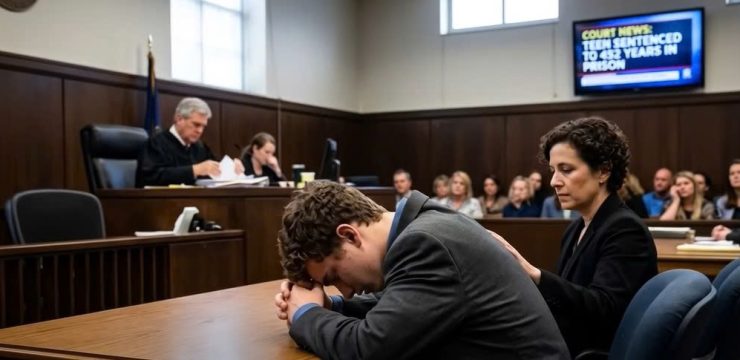
March 29, 2026 — The Haynie family case remains one of the most deeply unsettling incidents in recent United States history, drawing national attention not only because of its tragic outcome but also due to the difficult questions it raises about juvenile accountability, mental health, and the justice system. What unfolded inside a quiet home in Grantsville, Utah, in January 2020 continues to resonate years later, both in legal discussions and in the broader public conversation.

On January 17, 2020, law enforcement officers were called to a residence in Grantsville, a small and normally peaceful community located west of Salt Lake City. When authorities arrived at the scene, they discovered that four members of the same family had lost their lives. The victims included Consuelo Alejandra Haynie, 52, along with three of her children, ages 12, 14, and 15. All were found inside the home, and the circumstances indicated that the events had unfolded within a relatively short span of time.
Investigators worked to reconstruct what had happened, and early findings suggested that the incident occurred within the family setting, making it especially difficult for the community to process. Cases involving violence within a household often carry a particularly heavy emotional weight, as they challenge assumptions about safety and trust in the most familiar environments.
According to official reports, the father of the household returned home later that same day. Upon arriving, he encountered the situation and was injured during a confrontation with his son. Despite being hurt, he was able to respond quickly and ultimately disarm the suspect, bringing the immediate danger to an end. Emergency services were contacted, and he was transported to receive medical care. His actions played a crucial role in preventing further harm.
The individual taken into custody was 16-year-old Colin Jeffrey Haynie. Given the seriousness of the case, prosecutors made the decision to charge him as an adult under Utah law. While the justice system often treats minors differently due to their age and stage of development, certain cases involving severe offenses may be transferred to adult court. This step reflects both the legal framework in place and the gravity of the allegations involved.
As the case progressed through the legal system, attention turned to the courtroom proceedings. Haynie ultimately entered a guilty plea to multiple counts, including aggravated murder and attempted murder. By doing so, he formally accepted responsibility for the actions described in the charges. This decision eliminated the need for a full trial and shifted the focus of the case toward determining an appropriate sentence.
In July 2023, the court delivered its sentencing decision. Haynie received five consecutive sentences, each ranging from 25 years to life in prison. Because these sentences were ordered to run one after another rather than at the same time, the combined result means he will serve a minimum of several decades behind bars, with the possibility of remaining incarcerated for the rest of his life. This type of sentencing structure is often used in cases involving multiple victims, ensuring that each individual loss is recognized within the legal outcome.
During the court proceedings, observers noted moments that captured public attention and sparked conversation. Statements made in the courtroom added another layer of complexity to an already difficult case, prompting reflection on issues that extend beyond the legal process itself. These moments contributed to ongoing discussions about how the justice system addresses cases involving young offenders and serious crimes.
The case has since become a focal point in broader debates about how society should approach juvenile offenders. On one hand, there is recognition that young individuals are still developing, both emotionally and cognitively. On the other hand, there is an understanding that certain actions carry significant consequences, regardless of age. Balancing these perspectives is one of the most challenging aspects of the legal system.
Another important aspect of the discussion has centered on mental health. While specific details about the motivations behind the incident were not fully disclosed in public reports, investigators indicated that the individual may have been experiencing internal struggles prior to the घटना. Situations like this often lead to questions about whether warning signs were present and whether earlier intervention might have made a difference.
Communities and professionals alike have emphasized the importance of access to support systems, including mental health resources and family outreach programs. While no single solution can prevent every tragedy, increased awareness and early support are often seen as key components in reducing the risk of escalation in difficult situations.
The Haynie family case also highlights the role of law enforcement and emergency response in handling complex domestic incidents. From the initial call to the resolution of the immediate threat, each step required coordination and careful decision-making. These efforts, while focused on immediate safety, also contribute to the longer-term process of investigation and accountability.
For the community of Grantsville, the impact of the घटना has been lasting. Incidents of this nature leave emotional and social effects that extend far beyond the individuals directly involved. They prompt reflection, mourning, and a search for understanding in the face of circumstances that are difficult to comprehend.
In the years since the incident, the case continues to be referenced in discussions about law, ethics, and public policy. It serves as an example of how the justice system navigates complex situations involving multiple factors, including age, intent, and the nature of the offenses. It also underscores the importance of considering both accountability and the broader context in which such events occur.
Ultimately, the Haynie family case stands as a reminder of the challenges faced by individuals, families, and institutions when dealing with serious and unexpected events. While the legal process provides a framework for addressing actions and consequences, it also brings attention to the deeper questions surrounding prevention, support, and understanding.
As conversations continue, many hope that lessons drawn from this case will contribute to greater awareness and more effective approaches to addressing similar issues in the future.