For all the progress we’ve made in medicine, neuroscience, and technology, there are still aspects of the human body that remain puzzling to experts. Our bodies are incredibly intricate, always working, always adapting, and often communicating in ways we don’t fully understand. So when new research suggests that humans may possess a subtle ability to sense when death is near, it’s both fascinating and unsurprising. The more we learn, the more we realize how much remains undiscovered.
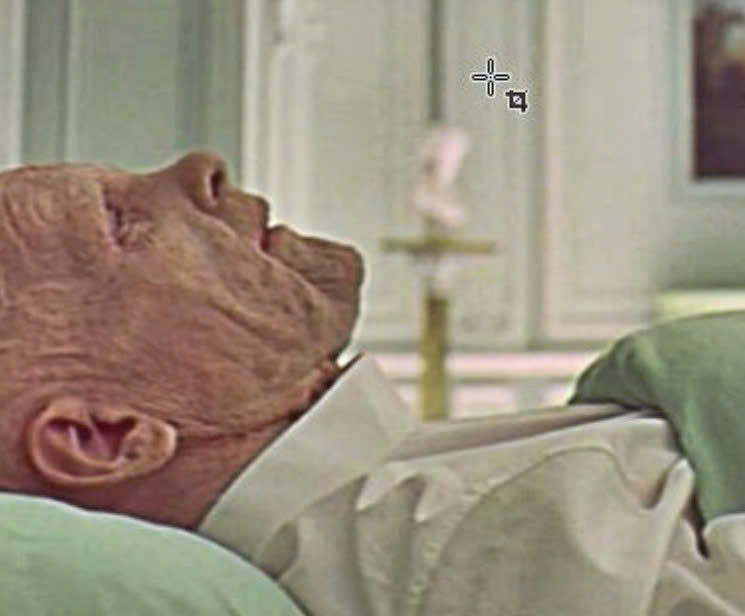
Many people talk about having a “sixth sense”—that intuitive feeling that something significant is about to happen. Scientists have explored this idea for years, and while intuition itself remains hard to quantify, recent findings reveal something concrete: humans can subconsciously detect a chemical released by the body shortly after death. This chemical, called putrescine, carries a strong, unpleasant odor associated with the earliest stages of decomposition. Even though most people are not consciously aware of this scent, our bodies recognize it instantly and respond in ways that appear to be rooted in primal survival instincts.
Two researchers—Arnaud Wisman from the University of Kent’s School of Psychology in Canterbury, UK, and Ilan Shira from the Department of Behavioral Sciences at Arkansas Tech University in Russellville, Arkansas—have spent years studying how scent influences human behavior. Their work shows that, much like animals, humans are wired to respond to certain odors automatically, even if we don’t realize it. Survival is an ancient instinct shared across species, and scent plays a major role in signaling when something is safe, dangerous, or changing.
When humans encounter the odor of putrescine, they react in two different ways: consciously and subconsciously. On the surface, a person may simply note that something smells unpleasant. But beneath that awareness, the body is already taking action. Heart rate may increase, vigilance may sharpen, and the brain begins scanning the environment for potential threats. These reactions mirror what animals do in nature—moving away, becoming alert, or preparing for self-preservation.
In one of Wisman and Shira’s experiments, people exposed to putrescine tended to distance themselves from the scent without fully understanding why. This happened even when participants were told nothing about the odor’s origin. Their instincts kicked in automatically. Just as animals flee from danger or engage in defensive behavior, humans showed a similar pattern, even though we’re far more removed from the environments in which these instincts first evolved.
Still, many people find it difficult to think of a smell as something that could trigger a fear response. We often associate fear with visual cues, loud noises, or direct threats. But research has consistently shown that scent plays a surprisingly powerful role in shaping emotions, preferences, and behavior. As Wisman and Shira explain, “We do not know why we like or dislike someone’s smell, and we’re usually not aware of how scent influences our emotions, preferences, and attitudes.” In other words, scent guides us more often than we realize.
One clear example of this influence is found in pheromones—odors naturally produced by males or females that can trigger behavioral reactions in the opposite sex. These reactions are not conscious decisions but biological responses deeply rooted in human chemistry. While pheromones are often associated with attraction, they serve as another reminder of how scent shapes our interactions, even when we aren’t thinking about it.
Putrescine, however, carries a completely different message. Instead of signaling connection or attraction, it communicates something else entirely—a warning. The researchers explain that putrescine signals danger or decay, prompting avoidance behaviors. The reaction is not based on fear in the traditional sense but on instinctive caution. The body interprets the scent as a sign that something in the environment has changed and that it may not be safe. Interestingly, people are not consciously aware of why they react this way. They don’t directly associate the odor with death, nor do they think about danger. The response happens subtly and automatically.
Wisman and Shira emphasize that this subconscious detection plays a meaningful role in how humans navigate the world. Our bodies recognize signals long before our minds process them. Whether the scent indicates a harmful situation or simply triggers a moment of caution, it serves as a reminder of how deeply connected we still are to our evolutionary past.
The findings from this research also open doors for further studies on human behavior, instinct, and how the senses work together to protect us. While the idea of sensing death may sound unsettling, the scientific explanation offers a more grounded perspective: our bodies are constantly scanning for information that keeps us safe, even when we’re unaware of it. Putrescine is just one example of a signal that triggers this internal alert system.
Understanding the role of scent in human behavior not only expands our knowledge of biology but also reminds us of how remarkable the human body truly is. Every day, without our awareness, our senses gather information, interpret subtle cues, and influence our decisions. Some of these cues are pleasant and positive, while others are more complex, connected to survival rather than comfort.
Research like this highlights how much more there is to explore. Scientists continue to uncover connections between scent, memory, emotion, and instinct—areas that may one day help us better understand both the conscious and unconscious parts of the human experience. For now, what we do know is that the human body communicates in ways that are far more intricate than we ever imagined.
The next time you notice yourself becoming alert for no apparent reason, or suddenly feeling uneasy without understanding why, it’s possible your senses picked up something your mind hasn’t processed yet. Our bodies often speak before we do.
If you found this information interesting or surprising, please consider sharing this article with family and friends on Facebook so more people can learn about the fascinating ways our senses shape our lives.