By the seventh month of my pregnancy, I had already learned to tell the difference between ordinary discomfort and something that truly felt wrong. Pregnancy comes with aches, fatigue, and moments of doubt, but that day was different in a way I couldn’t ignore. From the moment I woke up, an uneasy feeling settled deep in my body, the kind that doesn’t fade when you try to breathe through it or distract yourself with routine.
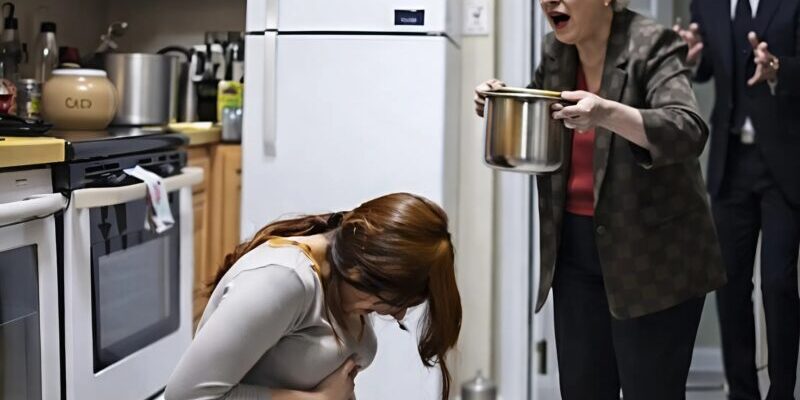
That morning, a dull pain began in my lower back. At first, I told myself it was nothing unusual, just another reminder of how much my body had changed. But as the hours passed, the discomfort grew sharper. By lunchtime, I had to stop and rest after simple movements. By evening, standing upright felt almost impossible. I leaned against the kitchen counter, one hand gripping the sink, the other resting protectively on my stomach, trying to steady myself.
“I don’t feel well,” I said quietly, fighting the rising panic in my chest. “I think I need to go to the hospital.”
My mother-in-law didn’t even turn away from the stove. Her voice was flat and impatient. She told me I wasn’t going anywhere until dinner was ready and accused me of imagining problems. According to her, people my age exaggerated everything, turning minor discomfort into unnecessary drama.
Another wave of pain hit me, stronger than before. I bent forward instinctively, my breath catching as fear crept in.
“Please,” I whispered. “Something feels wrong. I’m worried about the baby. I just want a doctor to check on me.”
She finally turned around, irritation written plainly on her face. She complained that I had been sitting around all day while she cooked and said the least I could do was help. She brushed off my concern as overreaction, insisting that my generation made everything bigger than it needed to be.
I tried to take a step toward the door, my legs trembling beneath me. Tears blurred my vision.
“I’m not pretending,” I said, my voice shaking. “I’m really scared.”
As I reached for the door handle, she grabbed my arm with surprising strength. Her grip hurt.
“You’re not leaving,” she snapped. “You won’t embarrass this family by acting like this at a hospital.”
The pain surged again, sudden and overwhelming. My vision darkened, and my knees nearly gave out. I knew then that I couldn’t stay.
“I’m going,” I said, barely recognizing my own voice. “I have to.”
Everything happened in a blur. In a moment of anger, she grabbed the pot from the stove. The hot soup spilled toward me before I even had time to react. I felt a sharp shock across my clothes and skin, followed by intense pain that stole the air from my lungs.
I screamed and collapsed onto the cold kitchen floor. My hands flew instinctively to my stomach as panic drowned out everything else. Lying there, I could only think one thing over and over: please let the baby be okay.
At that exact moment, my husband walked into the kitchen.
He froze when he saw me on the floor, my clothes stained, his mother standing there with the empty pot. His voice was quiet but filled with disbelief as he asked her what she had done.
She tried to explain, but he didn’t listen. He rushed to my side, lifting me carefully into his arms. He held me close and said we were leaving immediately.
At the hospital, everything moved fast. Doctors and nurses surrounded me, asking questions, attaching monitors, checking the baby. My husband never let go of my hand. After what felt like an eternity, a doctor pulled him aside.
He told my husband that we were very lucky. A little more time, he said, and the outcome could have been tragic. He explained that both my life and the baby’s had been at serious risk.
A few days later, once I had been transferred to a regular room, my husband told me he had filed a formal complaint. It was against his mother, for causing harm to a pregnant woman.
I didn’t argue. I simply nodded.
When my mother-in-law came to the hospital, she looked different. Older. Smaller. Her hands shook, and her eyes were red from crying. Standing in the doorway, she said she never meant for any of it to happen. She claimed she thought I was pretending, that I was avoiding responsibilities, that she hadn’t understood how serious it was.
She sat down and began to cry, begging me to ask my husband to withdraw the complaint. She reminded me that she was the baby’s grandmother and promised she had learned her lesson.
I looked at her in silence.
Even now, I still don’t know what the right answer is.