Just before dawn, a powerful earthquake struck along the China–Myanmar border, jolting millions of people awake and sending shockwaves across several parts of Southeast Asia. The sudden tremor, measured at a magnitude of 7.7, unfolded without warning and immediately raised concerns about the region’s preparedness for major seismic events. As the ground shook beneath homes and cities, communities were forced into survival mode, confronting widespread damage and uncertainty in the hours that followed.
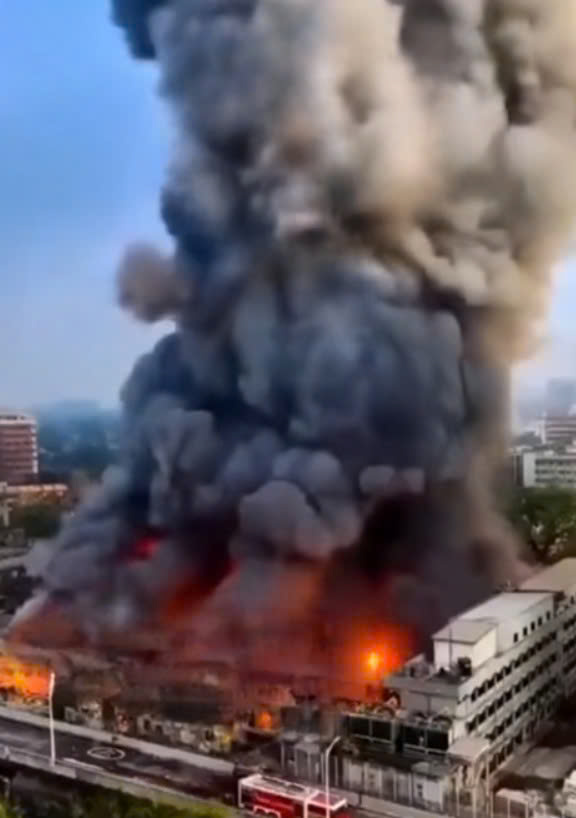
In the early hours of Monday morning, residents near the epicenter were shaken from their sleep by intense ground movement that lasted close to a minute in some areas. Seismologists later described the quake as one of the strongest to hit the region in decades. Its force was felt far beyond the immediate border area, with tremors reported in southern China, northern Thailand, and across large portions of Myanmar. For many, the experience was both frightening and disorienting, especially given the timing and intensity of the event.
According to the United States Geological Survey, the earthquake originated approximately ten kilometers below the Earth’s surface. This relatively shallow depth significantly increased the quake’s destructive potential, allowing energy to spread rapidly across the region. Communities closest to the epicenter suffered the most severe damage, particularly rural areas where older buildings and limited infrastructure offered little protection against strong seismic activity.
In villages near the border, poorly constructed homes collapsed under the force of the shaking, leaving families displaced and scrambling for safety. In larger cities farther from the epicenter, high-rise buildings swayed dramatically, prompting emergency evacuations as residents rushed outside. Witnesses described the ground moving in waves in some locations, while others felt sudden, violent jolts, illustrating how terrain and soil conditions can shape the experience of an earthquake.
The timing of the quake added to the chaos. Because it struck before sunrise, many people were asleep and had little time to react. Families poured into the streets in confusion, some still wearing nightclothes, holding children close as aftershocks continued. In northern Thailand, streetlights flickered on and off, windows cracked, and alarms echoed through neighborhoods. In China’s Yunnan province, residents reported apartment buildings shaking for nearly a full minute, leaving many hesitant to return indoors even after the tremors subsided.
Myanmar faced particularly difficult conditions, especially in rural and mountainous areas. Reports from local communities described collapsed walls, damaged roads, and widespread power outages. In several locations, electricity grids failed, water pipelines were disrupted, and mobile communication networks went offline. These infrastructure failures delayed emergency response efforts and left families unable to contact loved ones during the critical early hours after the quake.
The human toll of the disaster continues to unfold. Initial reports confirm dozens of fatalities and hundreds of injuries, though officials caution that these numbers are likely to rise as rescue teams gain access to remote regions. Hospitals across affected areas are struggling to manage the influx of patients suffering from fractures, head injuries, and other trauma caused by falling debris. Medical staff are working nonstop, supported by volunteers who have stepped forward to donate blood and assist with emergency care.
Authorities have expressed particular concern for isolated communities in mountainous terrain, where landslides triggered by the quake have blocked roads and made rescue operations more difficult. In these areas, reaching survivors requires time, specialized equipment, and careful coordination. Officials warn that delays could lead to higher casualty figures, underscoring the urgency of the response.
Search-and-rescue operations began almost immediately after the quake. First responders, soldiers, and trained volunteers were dispatched to the hardest-hit zones, working around the clock despite ongoing aftershocks. Teams equipped with heavy machinery, sniffer dogs, and thermal imaging cameras are carefully combing through collapsed structures in hopes of finding survivors trapped beneath the rubble.
Experts note that survival rates drop significantly after the first 48 hours following a major earthquake, making every minute critical. Even so, amid the destruction, there have been moments of hope. Rescue teams have reported several successful recoveries, including a child pulled alive from the remains of a damaged school building, offering a rare but powerful reminder of resilience in the face of disaster.
As Southeast Asia begins the long process of recovery, questions are already being raised about building standards, disaster preparedness, and regional cooperation. Earthquakes of this magnitude are rare but not unexpected in tectonically active zones, and experts emphasize the importance of investing in safer infrastructure and early warning systems. For now, affected communities are focused on meeting immediate needs—shelter, medical care, and reliable communication—while grieving losses and rebuilding their lives one step at a time.