I never expected that a dusty wooden box tucked away in my old shed would completely change my life. That afternoon, I had walked out there with the simplest intention—just to grab a screwdriver. The shed was dim and quiet, filled with the familiar scent of aged wood and hay. I was about to leave when something subtle caught my eye. A faint movement, almost imperceptible, stirred in the corner of the room.
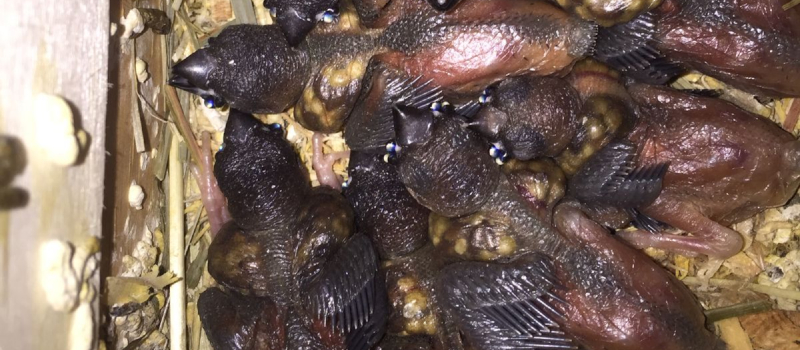
Curious, I lifted my flashlight and aimed it toward a small, dark wooden box resting against the wall. I assumed it was a mouse or maybe a piece of hay shifting in the draft. But when the beam of light reached inside, my heart skipped. Huddled together in the shadows was a cluster of tiny, hairless creatures, pressed tightly against one another, trembling with every shallow breath. They were so fragile it seemed even a gentle breeze could harm them.
I stood frozen, afraid to touch them. Their skin was smooth and dark, their bellies round and delicate. Their eyes were still sealed shut, and their tiny beaks were soft and barely formed. For a moment, I convinced myself their mother might return. I waited quietly, listening for wings or movement. But the shed felt abandoned—too still, too cold. Deep down, I sensed they had been left alone for longer than they should have been. If I walked away, they wouldn’t survive.
Carefully, I wrapped the small nest in a towel and carried it inside. Every few steps, I paused to make sure they were still breathing. Once in the house, I placed them in a small box lined with soft cotton. I set a warm lamp above them, remembering something I had once seen in a wildlife documentary. They began making faint squeaking sounds, tiny cries that hinted at hunger.
Panicking slightly, I searched online for how to care for newborn birds. I mixed a soft feeding formula and gently touched a dropper to the first small beak. Instantly, it opened wide. Then another followed, and soon all of them were stretching their thin necks upward, begging for food. In that moment, something shifted inside me. I felt a responsibility I hadn’t planned for. Without knowing their species or whether they would survive, I had become their caretaker.
The days that followed blurred into sleepless nights. Every two hours, I fed them, cleaned their tiny nest, and whispered encouragement as though they were my own children. Slowly, changes began to appear. Thin, pin-like feathers emerged along their wings, first dark and delicate. Soon, subtle hints of green shimmered in the light. When their eyes finally opened, they looked at me with surprising curiosity, as if recognizing the one who had kept them alive.
They were rarely apart, always pressed together in a tight bundle, as if unity was their instinct for survival. As they grew stronger, their personalities emerged. One was bold and always pushed forward for the first bite of food. Another hung back shyly, waiting patiently. A third chirped constantly, demanding attention. I named the bold one Captain. Even without fully formed wings, he carried himself like a leader.
Weeks passed, and my home filled with fluttering sounds and excited chirps. They began perching along the edge of their box, stretching their wings like athletes preparing for a race. Often, they stared out the window toward the sky, as though something invisible was calling them. The first time Captain leapt from the box and glided awkwardly across the room before landing clumsily, I nearly cried with pride. It was beautiful and bittersweet. The moment I both feared and anticipated was approaching—they were preparing to leave.
One bright morning, I carried the box outside. My heart pounded as I set it down on the grass and opened the lid. Captain hopped onto my hand and looked up at me with those dark, shining eyes. Without hesitation, he spread his wings and launched himself into the air. He circled above me once, steady and strong. One by one, the others followed, flapping wildly but managing to stay aloft. They formed a small, graceful group in the sky.
As they climbed higher, something clicked in my mind. These weren’t just ordinary backyard birds. Their wings were long and pointed, their bodies sleek and built for speed. The way they moved—quick, sharp, almost dancing with the wind—revealed the truth I had been unknowingly searching for. They were swallows.
I whispered the word aloud in disbelief. Swallows. Birds made for open skies and long journeys. Travelers guided by instinct and distant horizons. They were never meant to remain inside my home. They were born for something much bigger.
Captain circled back once more, releasing a sharp chirp that sounded almost like gratitude. Then he turned and led the flock toward the horizon. I watched until they became tiny specks against the vast blue sky. My hands trembled as I held the empty box. Tears slid down my cheeks, yet a wide smile stretched across my face. I had found them helpless and alone. I had fed them, protected them, and watched them grow. Now, I had to let them go.
I lingered outside a little longer, hoping for one last glimpse.
And then something incredible happened.
A soft breeze brushed my hair, and I heard familiar chirps above me. I looked up to see Captain returning with the others. They swirled in a tight circle over my house, their feathers catching the sunlight. For a brief moment, it felt as though they were telling me they remembered. They swooped low enough for me to see their shimmering wings before climbing back into the sky.
It wasn’t a goodbye. It was a promise.
Now, each spring, I find myself watching the sky. Somewhere high above, my little family of swallows is flying across miles of open air, guided by instinct and the seasons. And perhaps, when they pass over this small patch of land, they remember the wooden box, the warm lamp, and the hands that helped them learn to fly.