I have always shared an unshakable bond with my daughter, Emily. From the day she was born, she brought a kind of light into my life that is hard to put into words. She had her mother’s warm smile and a quiet determination that showed itself early on. Even as a child, she carried a rare mix of tenderness and strength. She felt things deeply, cared about others instinctively, and faced challenges with more courage than most adults I knew.
I never imagined I would one day raise her without her mother beside me. But life can change in an instant.
When Emily was just fifteen, her mother passed away unexpectedly. The loss shattered us. For Emily, it meant losing the person she trusted with everything—school worries, friendships, dreams, and fears. For me, it meant losing my partner, my steady balance, the person who shared the everyday joys and struggles of raising a child. Overnight, our world shifted in ways neither of us was prepared for.
The first months after her mother’s passing were a blur of grief and adjustment. I quickly understood that I had to become more than just a father. I had to learn how to be emotionally present in ways I hadn’t always mastered before. I had to listen more closely, pay attention to subtle changes in her mood, and create space for conversations that once might have felt awkward.
I had to attend school meetings on my own, help her navigate the complicated years of adolescence, and offer reassurance when the weight of loss became too heavy. There were nights when I lay awake wondering if I was doing enough. There were moments when I caught sadness in her eyes and felt completely helpless.
But through it all, Emily and I leaned on each other. We created small routines that grounded us—Sunday breakfasts, evening walks around the neighborhood, quiet conversations at the kitchen table. Slowly, we found a new rhythm. It wasn’t the life we had before, but it was ours.
Over time, our relationship grew even stronger. We learned to speak openly about our feelings. We respected each other’s independence while staying deeply connected. I watched her grow from a grieving teenager into a thoughtful, resilient young woman. When she graduated, pride filled my chest so fully it nearly brought me to tears. Her strength through adversity reminded me of her mother every single day.
A few years later, after much hesitation and reflection, I decided to open my heart again. Loneliness can settle in deeply after loss. While I would never replace my late wife, I knew companionship is part of a full and balanced life. That’s when I met Linda.
Linda was kind, intelligent, and self-sufficient. She had faced her own hardships and was raising a daughter, Jesse, who was close in age to Emily. When Linda and I married, we hoped to build a blended family rooted in respect and understanding.
At first, things seemed harmonious. We shared meals, celebrated holidays, and tried to create traditions that included everyone. Emily remained polite and respectful. Linda made efforts to connect with her. On the surface, it looked like everything was falling into place.
Yet over time, I sensed a subtle tension. There were no arguments or dramatic confrontations. Instead, it showed up in quieter ways—a slight shift in tone, longer pauses at dinner, a certain distance in the room. Emily never complained. Whenever I asked how she felt, she would smile and say, “Everything’s fine, Dad.”
But I know my daughter. I could tell when something weighed on her. I tried to encourage open conversations, yet I also didn’t want to create problems where there might not be any. Blended families take time to adjust. I believed patience would smooth out whatever strain lingered beneath the surface.
Years passed. Emily moved into her own place, built a career, and continued to grow into a capable adult. Our bond never weakened. We spoke often and made time for each other whenever possible.
Then one day, she shared news that filled me with overwhelming joy—she was expecting her first child.
The moment she told me I was going to be a grandfather, emotion washed over me. It felt like life was offering a new chapter, a fresh beginning. I imagined holding that baby, telling family stories, and honoring the traditions her mother once cherished. I knew how proud her mom would have been.
Determined to support her fully, I prepared our home so she would always feel welcome. I transformed the guest room with care. I painted the walls a soft, calming shade, brought in a comfortable mattress with fresh linens, and arranged warm lighting. I even placed a crib in the corner, thinking ahead to future visits. I wanted her to feel that this house would always be her safe place.
Last week, I had to travel briefly for work. Before I left, Emily mentioned she might stop by. I reminded her that the guest room was ready anytime.
My meetings ended earlier than expected, so I returned home late that evening, excited to surprise her. The house was quiet. As I walked down the hallway, something caught my eye.
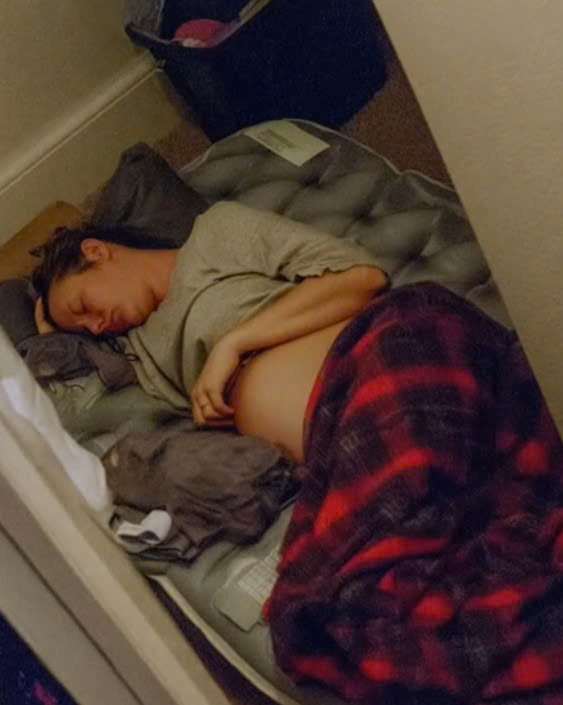
There, on the floor, lay my daughter—seven months pregnant—curled up on a thin air mattress. A blanket covered her, but her face looked pale and exhausted.
For a moment, I couldn’t process it. My heart pounded in disbelief. I knelt beside her and gently asked why she wasn’t in the guest room.
Her eyes filled with tears as she explained that Linda had told her there were no beds available and that the air mattress was the only option.
Shock turned to anger. I knew the guest room was ready. I had prepared it myself. I walked to the door and opened it.
The room was untouched. The bed perfectly made. The crib exactly where I had placed it.
In that instant, something inside me shifted. My daughter, who had endured so much loss, had been made to feel like a guest in her own father’s home. She was carrying my grandchild and had been given the bare minimum.
The next morning, I spoke privately with Linda. I remained calm, though my emotions ran deep. I explained what I had found and asked her to help me understand.
The conversation was difficult. There were explanations that didn’t match reality. But I made one thing clear: disrespect toward my daughter would not be tolerated.
Emily deserved comfort. She deserved kindness. She deserved to feel secure in her father’s house.
Family requires more than shared space—it requires empathy and fairness.
After much reflection, Linda and Jesse decided it would be best for them to move out. It was not a light decision, but it was necessary.
Since then, peace has returned to our home. Emily visits freely. She rests comfortably in the room prepared for her. We talk about baby names and nursery ideas. Watching her prepare for motherhood reminds me how quickly time moves.
This experience taught me a profound truth. Family is not defined by paperwork or proximity. It is defined by actions—by who consistently shows up with love, integrity, and respect.
My role as a father has not ended. It has simply evolved.
As I wait for my grandchild’s arrival, I feel deep gratitude—for resilience, for second chances, and for the opportunity to stand firmly beside the person who has trusted me since she was small enough to hold my hand.
Our home is once again a place of warmth and safety.
And I am reminded that steady, protective, unwavering love is the foundation upon which true family is built.