It was an ordinary afternoon in the school gym, the kind of day that blended into hundreds of others in the life of a teenager. The bright lights hummed softly above the polished floor, and the echo of sneakers squeaking across the surface bounced off the walls. Laughter, chatter, and the rhythmic thump of basketballs filled the air. For most students, physical education class was simply another break from textbooks and homework. But for him, it had always been something different.
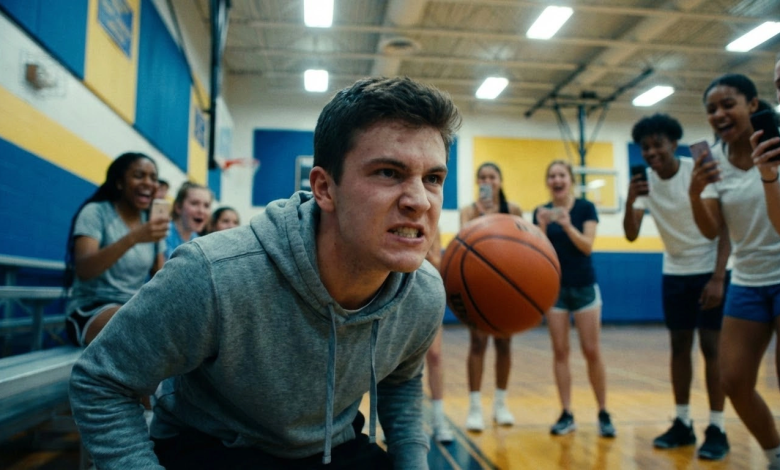
Gym class wasn’t about sports or competition. It was about navigating the invisible social map that seemed to govern everything in that room. Every look, every whisper, every small interaction carried weight. There were groups that belonged and groups that didn’t. There were students who moved through the space with effortless confidence, and others who learned to stay quiet and unnoticed.
He had long ago figured out which category he belonged to.
That afternoon he pushed himself harder than usual during the running drills. His legs burned, his breathing grew heavy, and sweat soaked through his shirt. But the exhaustion gave him something valuable — a few moments where his mind could focus only on the rhythm of his feet hitting the floor. Running had become his escape, a way to empty his thoughts and block out the noise around him.
When the coach finally blew the whistle signaling a short break, he walked to the bench along the wall and sat down. Sweat dripped from his forehead as he leaned forward, elbows resting on his knees. His lungs were still working hard, pulling in deep breaths of air.
For a few seconds, he believed he had earned a quiet moment.
Across the gym, another group of students were tossing a basketball back and forth. Their voices carried easily through the room. Jokes were exchanged, someone laughed loudly, and the game continued without much attention to anyone else.
He didn’t notice when one of the boys paused.
He didn’t see the basketball lifted in the air.
He didn’t hear the brief conversation that led to the decision.
What he felt was the sudden impact.
The basketball struck the side of his head with a dull, surprising thud. The force wasn’t strong enough to injure him, but it was enough to make his vision blur for a split second.
Then came the sound he knew too well.
Laughter.
Not the kind of laughter that follows a harmless accident, where someone quickly checks to make sure everything is okay. This laughter carried a different tone — one that assumed the moment was funny because of who it happened to.
Someone pulled out a phone.
Another student said something under their breath that caused a few more people to laugh.
The boy who had thrown the ball stood among his friends, relaxed and confident. He wasn’t angry, and he probably didn’t see himself as cruel. In many ways, he was simply comfortable. Comfortable in a place where he had always been accepted, surrounded by people who shared the same expectations about who belonged and who didn’t.
That confidence gave him power he didn’t even realize he was using.
The boy on the bench didn’t react immediately.
He remained seated, his hands resting on his legs, his eyes focused on the floor. From the outside, he looked calm, almost detached from the situation. Anyone watching might have assumed the moment didn’t affect him at all.
Inside, something was tightening.
The laughter echoed in the gym, bouncing off the high walls and mixing with the sounds of the ongoing games. Every second stretched longer than it should have. Every voice seemed louder than before.
For years he had believed something very simple.
Silence was strength.
If he ignored the jokes, they would eventually stop. If he refused to react, people would lose interest. If he stayed patient and avoided conflict, things would become easier over time.
That belief had shaped the way he moved through school. He avoided arguments, swallowed the words he wanted to say, and accepted small humiliations as part of daily life. Keeping his head down felt safer than challenging the system everyone else seemed comfortable with.
But as he sat there on the bench that afternoon, hearing the laughter that followed the basketball’s impact, a new realization slowly took shape.
Silence had never protected him.
Instead, it had quietly taught others how to treat him.
The understanding didn’t arrive with anger or frustration. It came with a strange sense of clarity, as if something that had been hidden for years was suddenly impossible to ignore.
He took one slow breath.
Then another.
When he finally stood up, there was nothing dramatic about the movement. No sudden burst of emotion, no raised voice, no angry gestures.
Just a deliberate decision.
The laughter continued at first, but it began to fade when a few students noticed the expression on his face. There was no embarrassment there. No nervous smile or attempt to brush off the moment.
There was only calm certainty.
He walked across the floor until he stood a few steps away from the boy who had thrown the basketball. For a brief moment, neither of them spoke. The room seemed quieter, as if the gym itself sensed that something important was unfolding.
When he finally spoke, his voice was steady and controlled.
“You’re making a very big mistake.”
There was no threat in his words. No shouting or anger.
Just the simple weight of someone who had finally decided that things would not continue the same way.
The gym didn’t erupt into chaos. No one rushed forward. No one cheered or mocked him.
Instead, the room paused.
Students glanced at each other, unsure of how to respond to a moment that had suddenly shifted in tone. What had started as a joke now felt different, as if a line had quietly been crossed.
He didn’t wait for a response.
He didn’t demand an apology.
Turning calmly, he walked toward the door of the gym and stepped into the hallway. The sounds of the class faded behind him as he continued down the corridor.
For the first time in a long time, his steps felt steady.
The others in the gym would eventually return to their games, their conversations, and their routines. They might not fully understand what had changed in that moment or how far the consequences of their actions might travel.
But he understood something important.
Some moments in life don’t require a dramatic ending.
They only require a decision.
And that day, standing in the middle of the gym after years of quiet endurance, he made a choice that would shape everything that followed.
For the first time in his life, he chose not to disappear.