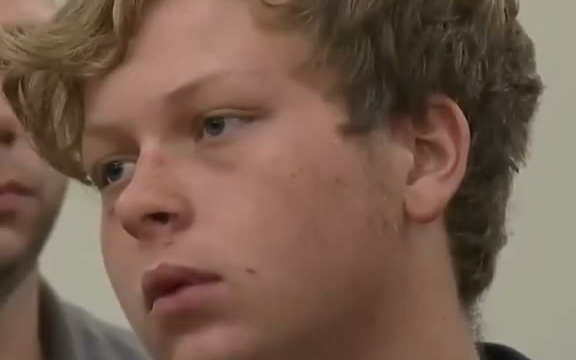
This is a quiet story about bullying, silence, and the moment a person finally decides they will no longer fade into the background.
No one in the gym that afternoon believed anything important was about to happen. To most of the students, it was just another physical education class—bright fluorescent lights buzzing overhead, the echo of sneakers on polished floors, and the restless noise of teenagers counting down the minutes until the bell rang.
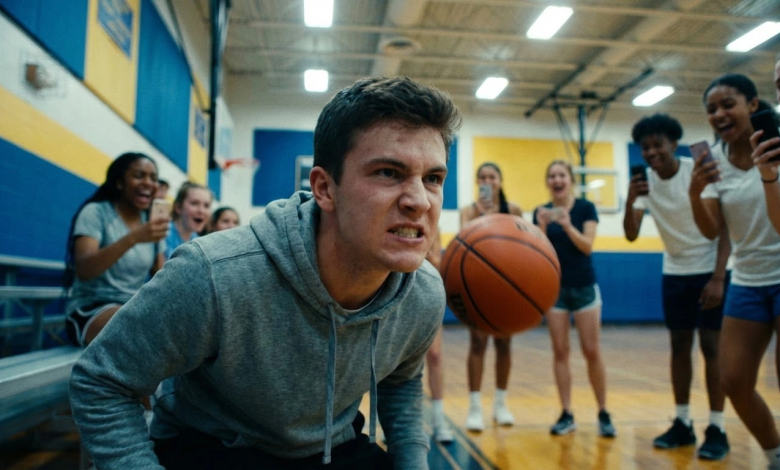
For him, though, the gym had never been just a class.
It was a place where the rules of social life played out more clearly than anywhere else in the school. The loudest voices dominated the space. The strongest bodies earned respect. And everyone else quietly learned where they belonged in the invisible hierarchy.
He had long ago discovered his place.
Somewhere along the edges.
That afternoon he ran harder than usual during the warm-up laps, pushing his body farther than the teacher had asked. His lungs burned and his legs felt heavy, but the effort helped clear the fog in his head. Running had always done that for him. When he moved fast enough, the noise of the world softened.
By the time the whistle blew and students scattered toward the benches, he felt drained but calm.
He sat down, leaning forward with his elbows on his knees, sweat dripping slowly from his forehead onto the gym floor. For a few seconds, he allowed himself to breathe and enjoy the quiet space inside his own thoughts.
He believed he had earned that moment.
What he didn’t know was that across the gym, someone else had already decided to turn that moment into entertainment.
The boy who picked up the basketball wasn’t angry.
He wasn’t the kind of bully people expect in dramatic stories. He didn’t scowl or shout threats. In fact, he looked relaxed, surrounded by friends and laughter.
He was popular, confident, and comfortable in a room that had already chosen sides.
That was what made it worse.
The boy bounced the basketball once, twice, as if testing its weight in his hands. A few nearby students began to notice where his attention was directed. Smirks appeared. A couple of phones quietly lifted.
But the boy sitting on the bench never looked up.
He didn’t see the basketball leave the other student’s hands.
He didn’t hear the moment the laughter began forming around him.
He only felt the sudden, dull impact when the ball struck the side of his head.
The sound echoed through the gym—rubber against bone, followed immediately by something far louder.
Laughter.
It wasn’t the kind of laughter that comes from surprise or concern. No one asked if he was okay. No one rushed over to check on him.
Instead, the sound bounced off the high walls of the gymnasium like a wave of approval.
Someone made a joke.
Someone always did.
Phones appeared more openly now, screens glowing as students recorded the moment. In their minds it was harmless, something silly to share later.
A quick clip. A few laughs. Nothing serious.
The boy on the bench remained completely still.
He didn’t reach for his head. He didn’t look around to see who had thrown the ball. From the outside, he appeared calm, almost detached from the scene unfolding around him.
But inside, something was changing.
For years he had believed silence was the strongest response.
If someone teased him, he stayed quiet. If someone laughed, he ignored it. If someone crossed a line, he convinced himself it wasn’t worth the trouble to react.
He believed patience would eventually earn respect.
He believed that if he didn’t respond, people would lose interest and move on.
Most of all, he believed that keeping his head down was the price of peace.
That belief shaped the way he lived his life at school. He avoided arguments. He swallowed words before they reached his lips. Small humiliations were treated like storms he simply had to wait out.
But sitting there on the bench, while laughter filled the gym and the basketball rolled slowly across the floor, something finally became clear.
Silence had not protected him.
It had trained everyone else how to treat him.
The realization didn’t arrive with anger.
It arrived with clarity.
His breathing slowed. The noise of the gym began to feel distant, as though it belonged to another room entirely. The knot tightening in his chest settled into something steadier—something more deliberate.
He stood up.
The movement wasn’t dramatic, and it wasn’t rushed. He simply rose from the bench with a calm that felt unfamiliar even to himself.
At first, the laughter continued.
But it started to weaken as more students noticed the expression on his face.
There was no embarrassment there. No pleading for approval. No attempt to hide behind a smile the way he sometimes had before.
Instead, his expression was steady and composed.
He walked across the gym floor, his footsteps quiet but certain.
The boy who had thrown the basketball was still standing near the center court, now holding another ball as if unsure what to do next.
When their eyes met, the room seemed to grow quieter.
The boy from the bench stopped a few feet away and looked directly at him.
For a brief second, neither of them spoke.
Then he said something that changed the atmosphere of the entire gym.
“You’re making a very big mistake.”
His voice wasn’t loud.
It carried no anger, no shouting, no threat.
Only certainty.
The words floated through the gym like a weight settling into place. Conversations faded. A few students lowered their phones.
No one cheered. No one mocked him.
For a moment, everything seemed suspended in that quiet space between what had happened and what might happen next.
The students watching didn’t fully understand what those words meant. They didn’t yet realize how far the consequences of small moments could travel beyond a single afternoon.
But they could feel something shift.
The boy who had thrown the basketball looked different now—less confident, less certain of the invisible protection popularity usually offered.
The silence was brief, but it was enough.
The boy from the bench didn’t stay to argue. He didn’t demand an apology or wait for anyone to explain themselves.
He simply turned and walked toward the locker room doors.
His steps were steady.
Behind him, the gym slowly returned to life—voices rising again, students moving, the teacher blowing a whistle to regain order.
But something had changed.
He felt it with every step.
For years he had believed disappearing quietly was the safest way to survive school.
That day, he discovered something else.
Some moments don’t need a fight.
They only require a decision.
And for the first time in his life, he chose not to disappear.