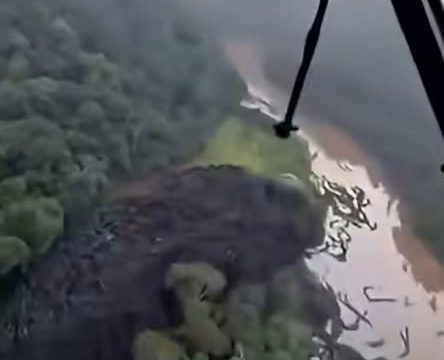
Those who arrived at the scene first said something about the accident felt unsettling from the start. The morning was clear, the sky calm, and the rural road unusually quiet. There were no signs of chaos, no obvious explanation for what lay ahead. Yet there it was—a car submerged in a narrow stream, its stillness heavier than the water that covered it. Near Sítio Piripiri, along the CE-060 highway where traffic usually passes without incident, danger is not something people expect. That is precisely why this tragedy has stirred not only grief, but deep and lingering questions across the Cariri region.
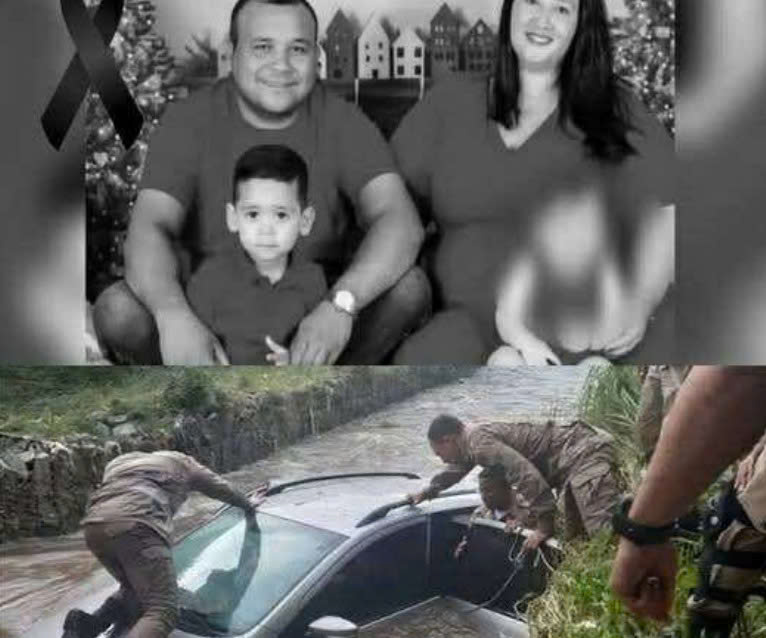
Just after sunrise on Sunday, July 16, the peace of the countryside was abruptly broken. A family of three lost their lives when their vehicle left the roadway and plunged into a stream between the municipalities of Caririaçu and Juazeiro do Norte. The victims were Hérida Nascimento da Silva, her partner Sebastião Cícero Gomes, and their three-year-old son, Miguel Nascimento Gomes. In a matter of seconds, a routine drive turned into an irreversible loss that would leave an entire community in mourning.
Earlier that morning, the family had departed from Várzea Alegre. The drive was expected to take about an hour, a familiar route for many locals. Their destination was Juazeiro do Norte, and their reason for traveling was not leisure or celebration. They were seeking medical care for young Miguel, who was scheduled to undergo a surgical procedure. It was a trip motivated by responsibility, concern, and hope for a better outcome for their child.
That hope never reached its destination.
According to information released by TV Verdes Mares and the Ceará Military Fire Department, the accident occurred around 7 a.m. The vehicle reportedly left the asphalt without warning and fell into a stream approximately five meters deep. The depth of the water and the position of the car made rescue efforts extremely challenging. Emergency responders worked under difficult conditions, but by the time they arrived and accessed the vehicle, all three occupants had already died.
Authorities have not yet determined what caused the car to leave the road. Investigators are examining multiple possibilities, including mechanical failure, driver error, and other contributing factors that may have played a role. At this stage, no conclusions have been announced, and the investigation remains ongoing. Still, among residents of the area, a sense of unease persists. The road is not widely known for serious accidents. Weather conditions were stable, visibility was good, and no other vehicles were involved. For many, the lack of an obvious explanation only deepens the sorrow.
In the days following the tragedy, the Cariri community has struggled to process the loss. Neighbors, friends, and even those who never knew the family personally have felt the weight of what happened. Stories like this resonate because they reflect fears shared by so many people—the vulnerability of loved ones, the risks of ordinary routines, and the fragile nature of life itself. This was not a reckless journey or an unusual circumstance. It was a family doing what countless others do every day.
As news of the accident spread, conversations about road safety grew louder. While the CE-060 has not historically been considered a high-risk highway, this incident has prompted renewed calls for thorough inspections, improved signage, and increased monitoring of rural road conditions. Residents and local leaders alike are asking whether more could be done to prevent similar tragedies, even on roads that appear safe and familiar.
Yet beyond discussions of infrastructure and safety measures lies a more profound reality. Statistics and investigations cannot fully capture the human cost of this loss. A child whose future was just beginning. Parents whose lives revolved around care, work, and hope for their son. A family that set out with purpose and never returned home. Their absence is now felt in empty rooms, unanswered messages, and memories that will forever carry the weight of that final morning.
For those left behind, grief does not end when the headlines fade. It becomes part of daily life, shaping routines and redefining what “normal” means. In communities like Cariri, where people are closely connected, such losses ripple outward, touching far more lives than those immediately involved. The memory of that quiet Sunday morning, and the questions it left unanswered, will not easily disappear.
This tragedy serves as a solemn reminder of how quickly life can change. A clear road, a short drive, and a hopeful destination were all it took to set the stage for an unthinkable outcome. As the investigation continues, many hope that clarity will eventually bring some measure of understanding, if not closure.
Until then, the region mourns a family whose journey ended far too soon, and reflects on the delicate line between ordinary moments and irreversible loss. Their story is not just news—it is a reminder to value every departure, every arrival, and every moment shared with those we love.