Some songs entertain us for a season. Others remind us of a particular moment in life. Then there are the rare songs that seem to grow alongside us, revealing new meanings as the years pass. Fleetwood Mac’s “Landslide” belongs firmly in that category.
For more than five decades, this remarkable song has connected with listeners across generations. What makes it so special is not flashy production, complicated arrangements, or dramatic storytelling. Instead, its power comes from something far more enduring: honesty.
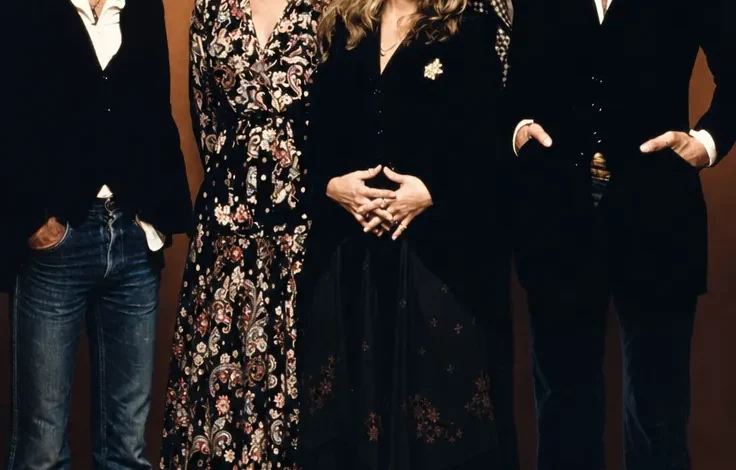
Written by Stevie Nicks during a period of uncertainty in her life, “Landslide” explores themes that nearly everyone eventually faces. It speaks about change, self-discovery, personal growth, and the questions that arise when life moves in unexpected directions.
At the time she wrote the song, Nicks was standing at a crossroads.
Her future as a musician was far from certain. Success had not yet arrived, and there was no guarantee that it ever would. Financial pressures, personal challenges, and doubts about her career weighed heavily on her mind. Like many young adults trying to find their place in the world, she found herself wondering whether she was making the right choices.
Those emotions became the foundation of “Landslide.”
Rather than hiding her fears, Nicks transformed them into music. The song became a reflection of her inner thoughts, capturing a moment when she was forced to evaluate her dreams, her relationships, and the direction of her life.
What makes the lyrics so powerful is their universality.
Even though the song emerged from Nicks’ personal experience, the questions it asks belong to everyone.
Have I changed?
Am I becoming the person I hoped to be?
Did I make the right decisions?
What happens when life doesn’t unfold exactly as planned?
These are not questions limited to any particular generation. They follow people throughout life, resurfacing during moments of transition, uncertainty, and reflection.
Young listeners often connect with the song because it captures the anxiety of stepping into the unknown. At twenty, life can feel exciting but also overwhelming. Every decision seems important, and the future appears both full of possibility and frighteningly unpredictable.
For someone in that stage of life, “Landslide” feels like a thoughtful companion offering reassurance that uncertainty is a natural part of growth.
Years later, the same song can take on an entirely different meaning.
By middle age, many people have experienced both victories and disappointments. Careers evolve, families grow, priorities shift, and unexpected challenges appear. Looking back, individuals often realize that life rarely follows a straight path.
At that point, the song’s reflections on change begin to resonate even more deeply.
The words feel less like questions and more like observations gained through experience.
Then comes another stage of life when the song becomes even more emotional.
Many listeners say that hearing “Landslide” in their sixties or seventies feels completely different than hearing it in their twenties.
The reason is simple.
With age comes perspective.
As people grow older, they accumulate memories, lessons, successes, regrets, and countless moments that shape who they become. The passage of time itself becomes more visible.
Friends move away.
Children grow up.
Careers end.
New chapters begin.
The themes explored in “Landslide” become increasingly personal because listeners have lived through the very experiences the song describes.
Few songs manage to evolve alongside their audience in this way.
One of the reasons “Landslide” remains so effective is its simplicity.
The arrangement is remarkably understated. Rather than relying on elaborate instrumentation or complex production techniques, the song centers around acoustic guitar and vocals.
That simplicity creates space for the message.
Nothing distracts from the emotion contained within the lyrics.
Every note feels intentional.
Every word matters.
The stripped-down approach allows listeners to focus entirely on the story being told and the feelings behind it.
Stevie Nicks’ vocal performance plays an equally important role.
She sings with vulnerability and sincerity, never sounding as though she is trying to impress the audience. Instead, she sounds like someone sharing deeply personal thoughts with a trusted friend.
That authenticity creates an immediate emotional connection.
Listeners believe her because the emotions feel genuine.
There is no need for dramatic flourishes or exaggerated performances.
The honesty speaks for itself.
Over the decades, countless artists have covered “Landslide,” introducing the song to new audiences and demonstrating its lasting appeal. While each interpretation brings something unique, the heart of the song remains unchanged.
Its message continues to resonate because the human experience it describes remains universal.
Technology changes.
Fashion changes.
Popular culture changes.
But people still struggle with uncertainty.
They still wonder whether they are making the right choices.
They still reflect on how life has shaped them.
And they still search for meaning during periods of transition.
That timeless relevance explains why “Landslide” continues to find new listeners year after year.
It is not simply a song about growing older.
It is a song about accepting change.
It is about recognizing that transformation is unavoidable and that personal growth often requires courage.
Most importantly, it reminds listeners that uncertainty is not necessarily something to fear.
Life is constantly evolving, and every stage brings opportunities to learn, adapt, and discover new strengths.
More than fifty years after it was written, “Landslide” remains one of the most beloved and emotionally resonant songs ever recorded.
Its enduring popularity is a testament to the power of honest songwriting and genuine emotion.
Few recordings capture the complexity of life with such grace and simplicity.
Few songs remain as meaningful across multiple generations.
And few pieces of music age as beautifully as Fleetwood Mac’s timeless classic.
Perhaps that is why so many people return to it again and again throughout their lives.
The song does not change.
But we do.
With each passing year, each new experience, and each new chapter, “Landslide” seems to reveal another layer of meaning.
And that rare ability to grow with its listeners is what makes it one of the most emotionally powerful songs ever written.